Walking Los Olivos

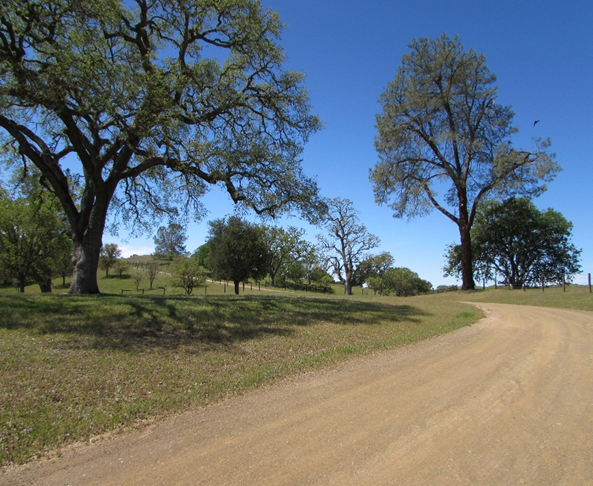
Lush is not a word I normally use for the hills of California’s coastal range. The seasons here too often turn to dry golden grass. The leaves of the native Oaks are small and the bark freckled with cracks. It is a landscape I adore, one I grew up around and still consider a gift from nature. But this landscape is not best described with extravagant words: lavish, plush, generous. It can be harsh and barren. But if you visit Los Olivos in the spring, it may surprise you.

The town surprised me. A simple few minutes off Highway 101 through a drive that was absolutely lush, the town fit the landscape of the region. Country-like lavish, polished clapboard, inviting. It’s a gem nestled in the rolling hills of Santa Barbara County. Known for its picturesque atmosphere, this town’s rich character offers an escape from everyday life.

My walk began at the Corner House Café. Central Coast Beach Boardwalkers, a club of the American Volkssport Association, kindly provides a map of two walks in the community in the brochure display inside the coffee house ($3.00 donation, no online access.) One is a 3.1-mile walk, the other a longer 6.8-mile walk. I was here to explore the downtown area, so I chose the shorter walk, though the mini-horse farm on the longer route tempted me.

The town is peaceful. Early morning sun poked over the hills, but with a soft touch. The slow pace here encouraged me to take my time and absorb the details. The walk took me past Los Olivos’ historic architecture. Old buildings, with their classic façades and quaint storefronts, tell yesterday’s stories. I paused in front of the Los Olivos General Store, a staple since the late 1800s. Many hands had turned its doorknob before mine.

As I strolled, the scent of freshly baked pastries wafted from a nearby business, and I couldn’t resist. Buttery croissant in hand, I sat on an outside bench, savoring the warm pastry, watching the town’s residents go about their day. There’s a certain intimacy in this experience—sharing a moment of simplicity with the community.

Los Olivos is known for a vibrant arts scene. My walk took me past several galleries, each showcasing the work of local artists. One particular gallery caught my eye with its colorful paintings depicting the landscapes of the region. These works captured the drive I had just finished and reminded me how fortunate I was to experience this scenery firsthand.

At the edge of town, I could see nearby vineyards stretched out in every direction, their lush greenery on display. Los Olivos is more than just picturesque; it is a place where history, culture, and nature converge to create an inviting atmosphere. The simple act of walking through its streets allowed me to connect with both the town and myself in a way that enriched my walk.

Slow down, savor the moment, grab a map from the Central Coast Beach Boardwalkers and stroll. In this small corner of California, I discovered not only a picturesque setting but also a sense of belonging and peace that is often hard to find in our fast-paced world.
Walking Montaño de Oro, Point Buchon

I’ve been hoping for a lot of things lately. Hoping to make plans that don’t need constant revision. Hoping for new places to go. Hoping for more walks that take me long into the hills or along the beach through the dunes. Longer walks that stretch my calves and work my lungs and teach me to breathe. I like stability and routine, but sometimes a little change helps everything in life.

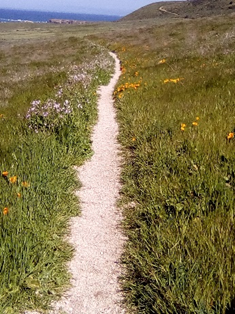
Just around the corner is a place that gives the possibility of a longer walk. Montaño De Oro State Park lets everyone ramble however they want. There are crushed granite trails, asphalt trails, trails along the edge of the ocean and ones straight up mountains. The path south along the coast toward Point Buchon, way in the distance, calls to me. I haven’t yet walked it.

The trail winds its way, out there beyond where I have ever been, a trail that runs up the hill, around the bluff, and disappears into that softly turquoise sky. In the spring, the long path is a warm earthen line between mint-colored grasses with occasional gold from poppies or goldenrod wild flowers. I see it from a distance. The path invites me like all those routes that wait impatiently to be walked, while I test out my footwork and the strength of my laces or the time until my next obligation or whatever else is keeping me from setting out for a long stroll.

It’s a good challenge. The curve of the pathway is so far off it disappears from view, marking the spot that is probably half-way to the point where I plan to turn around. Some walks that I’ve never taken, like this one, I think about and design a route and re-think and design again until I can put foot to path. The road will be similar to others I have taken but not exactly the same. I know the trail will be a worthy one, if only for the freshness of the air.

Our lungs know what is good for them, and this air is their dessert. Deep breaths are on the menu. Replenish your lungs, relax your mind, calm your heart with those long measured breaths. Good health waits for me on the long walk into the hillside along the Montaño De Oro ocean cliffs. Shorter walks around the area have taught me what I might expect on a longer hike. Seven miles, eight, maybe nine or ten by the time I take the return trip. What’s keeping me from this long walk?

I’ve been reaching for a more demanding work-out inside my walking self-therapy. We all get into times when we have too much sameness. The same wake-up time, the same breakfast, the same walk every day. All of that is good, but there is also goodness alongside a challenge. I have held onto this quest to take a long walk for quite a while. It’s a forever to-list that hasn’t been done. Is there a rush? Do I need the pressure of a mental reminder that I have a goal I haven’t reached?

One step after another – this philosophy makes my life simpler, and when I remember it, it makes my life better. But sometimes the simple way of looking at things needs a second look. Sometimes, life isn’t simple. Right now, as I plan that long, long walk, my heart says ‘go’, but my hip says ‘no’. That’s when I have to remember that even many small walks to long places will get me there, eventually.

Walking USA

A walking lifestyle intrigues me. Twice I have lived where people walked as a way of life, where it is more common than driving a vehicle. For most Americans, it takes some getting used to. It certainly did for me.

In South America and Eastern Europe, when people shopped, they carried two empty bags and walked to the market. Those two empty bags remained a puzzle to me until the first day I went out to shop.

Like everyone, I walked. The grocery store looked like any modern store in the states, and the products, though the labels weren’t in English, were ones I recognized or could figure out. If the plastic tubes were new to me, and the letters confusing, the pictures of catsup pouring onto a burger helped me understand. I happily filled my cart with the things that people need when they move into new apartments. I wheeled it all to the check-out register, paid, watched as they put the items into bag after bag, filling to the top. I walked my cart out to the front of the store thinking I had done well.

Then I looked to the very small parking lot – few cars, and none belonged to me. How would I make it home with my overloaded bags? You can bet the next time I needed to shop, I took two empty bags with me and stopped shopping when they were filled.

That was just a simple lesson, one of many. It didn’t stop me from admiring places that accommodated walkers. And it hasn’t stopped me from rating my favorite vacations based on how much I can see by foot.

Recently, I began to plan a vacation from our home trying not to use a car. My idea was to start out from my front door, two bags in hand, like my neighbors in those other countries had done. But it would be a long walk, thirty days, 15 out and 15 back. Where would I go?

My plans took me twenty miles as the crow flies. The walk itself was much longer. I had to find routes around freeways, to hotel stops and campgrounds, along walking paths, and to bathrooms. That was just the planning stage, and it took me basically to Trader Joe’s and back. As much as I like Trader Joe’s, it wouldn’t be much of a vacation.

At times, I complain about our rugged American walking life. We have trail systems and back-country treks. We rate our outdoor adventures according to the inclines we mount, and we like to be challenged. There’s nothing wrong with all that, but it seems we miss out on half of the pleasures of simple walking, the part that comes from ease and comfort. That’s where our walking life leaves us in the dust. We normally hike in rustic places, not through our cities. We don’t have a system of walking paths. If we visit towns, we can venture out on our own to find walking spaces, or we may join a walking tour, but a walkable path from one town to the next city isn’t easy to find.

But I have found an organization of Americans who walk. They are called American Volkssport. They have mapped out and organized thousands of walks in our towns and cities and many places of interest in our country. I have taken a couple of their walks, and they are delightful, even if I have to drive to the start point.

In the next year, I plan on taking as many of these walks as time allows. You can join me by reading about them here in Estero Bay News. Or you can join me on the path, one step at a time.

Next up: Walking Los Olivos

Walking the Refuge by the Sea

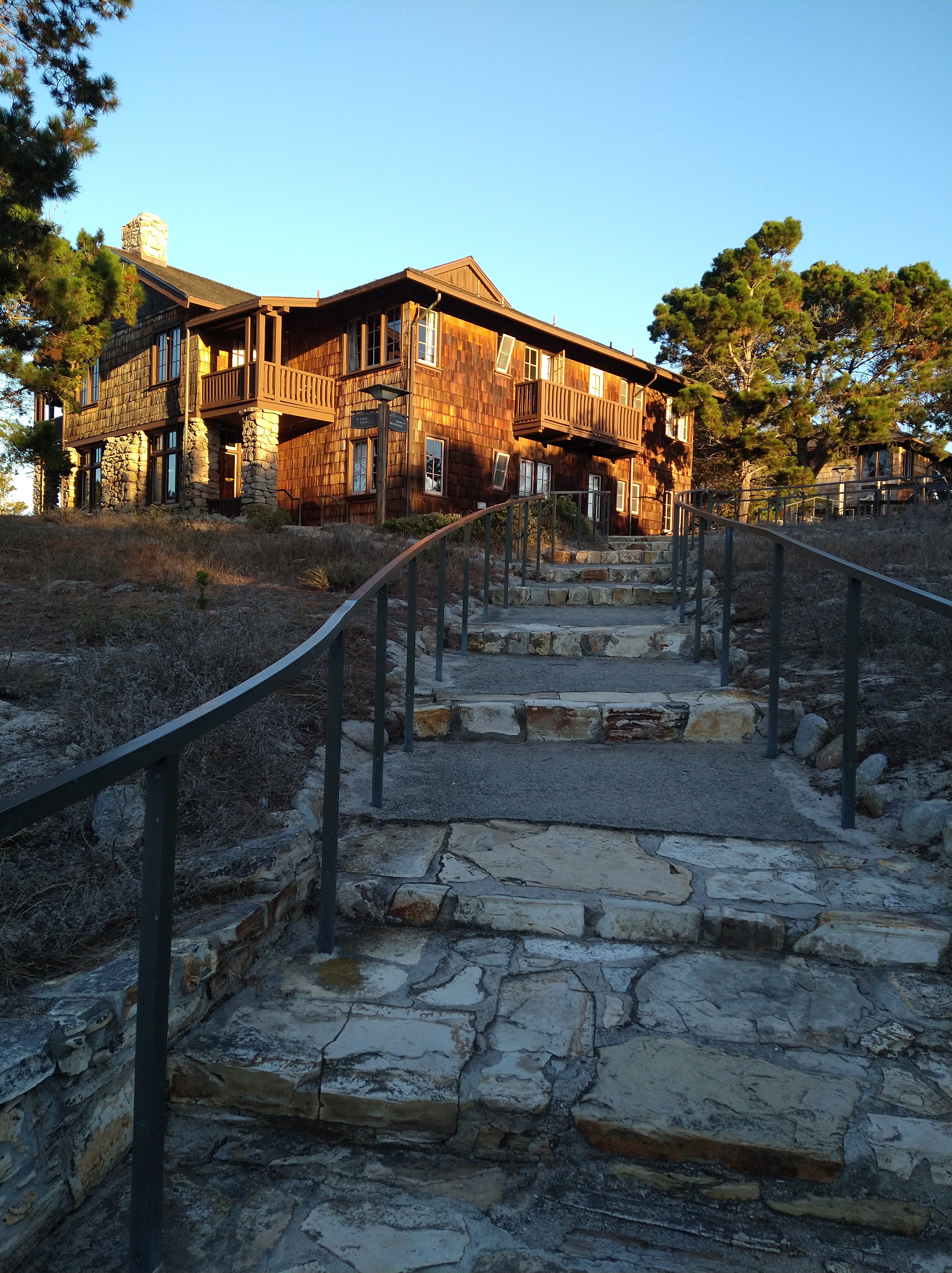
One place along the California coast pulls me back time after time. Stone walkways from the last century, historic buildings, and boardwalks through dunes appear like wishes from a better life. The place is called Asilomar, or Refuge by the Sea. If you are looking for tranquility, this is a good place to start.

A short two and a half hours from Estero Bay, Asilomar rests between Pacific Grove to the north and Pebble Beach to the south. It is owned by the State of California and there for anyone, anytime to come and walk its pathways. This open-ended invitation offers a rare sense of welcome. There is no entrance fee. You will find no entrance gate. If you wish to be there, you have simply to walk from one existence into another.

The refuge calls to wandering folk. The climate and fresh air revive you. Wide pathways crisscross the grounds. You can pick any route and wind up somewhere that is a complete surprise. Stop along the way and admire rustic buildings on the grounds. Even if you feel lost, you won’t be for long. Just continue the loop and you will return to the spot where the trail began, with a sense of calm that is Asilomar’s gift to everyone who walks there.

This refuge keeps the natural geography so that as you walk, it’s a reminder of what coastal California looks like untamed and undeveloped. The dunes shift daily. Plant life follows a craggy growth, sculptures-in-the-making. Tiny flowers bloom in the sand. Wooden walkways give you the right to step into a place that only asks you to be at peace.

The trail from the center of the property to the beach will wait patiently for your footstep. Sit on a lawn chair in front of Hearst Social Hall before you go or when you return, the choice is yours. Sooner or later, though, you will choose to follow the call of the Pacific. Walk to the bluffs above the beach and take in the extensive ocean view before you return to the Asilomar grounds. Or you can continue to stroll along the wooden boardwalk north on the bluffs fronting the ocean. Really ambitious walkers can hike to Cannery Row in Monterey, the next-door community. You can also add a tidepool to your adventure.

My favorite walk is to take a right-hand turn onto the pathway off the main boardwalk just before the beach. You are still on Asilomar’s compound, heading up an easy incline. Once at the top of the dune, you can walk along a ridge, or take a seat on a bench. This boardwalk also offers side-trips for exploring. One of the walkways takes you to an end spot where you can sit, especially at sunset, looking north past a wooded gully, south to the long curling beach, or west onto the ever-present roll of the Pacific.

Most walks are the daily habits of people on-the-go. Routine, known, and often appreciated, these customary treks help our days have meaning. Others challenge each person in different ways: a physical test or a mental task. Any walk you take in Asilomar, this refuge-by-the-sea, will transport you to a place that, with one small step onto the grounds, brings an enormous sense of peace.

Tumwater Historical Park

On a crisp autumn afternoon, I step onto a public pathway and fall in love with fall.

I’ve always tried to call the season by its proper name: autumn. I think it was never a true season for me. I lived in places where there were no real seasons, or where the change from one time of year to another was more like summer-winter (and a small winter at that.) Well, there was once that wild weather year in Ukraine, but that is best forgotten. Here, in Tumwater Washington, USA, there is a true autumn where leaves really do fall and weather straddles that divide between summer’s and winter’s extremes. Fall is here, not just autumn, and I can’t wait to see this season progress.

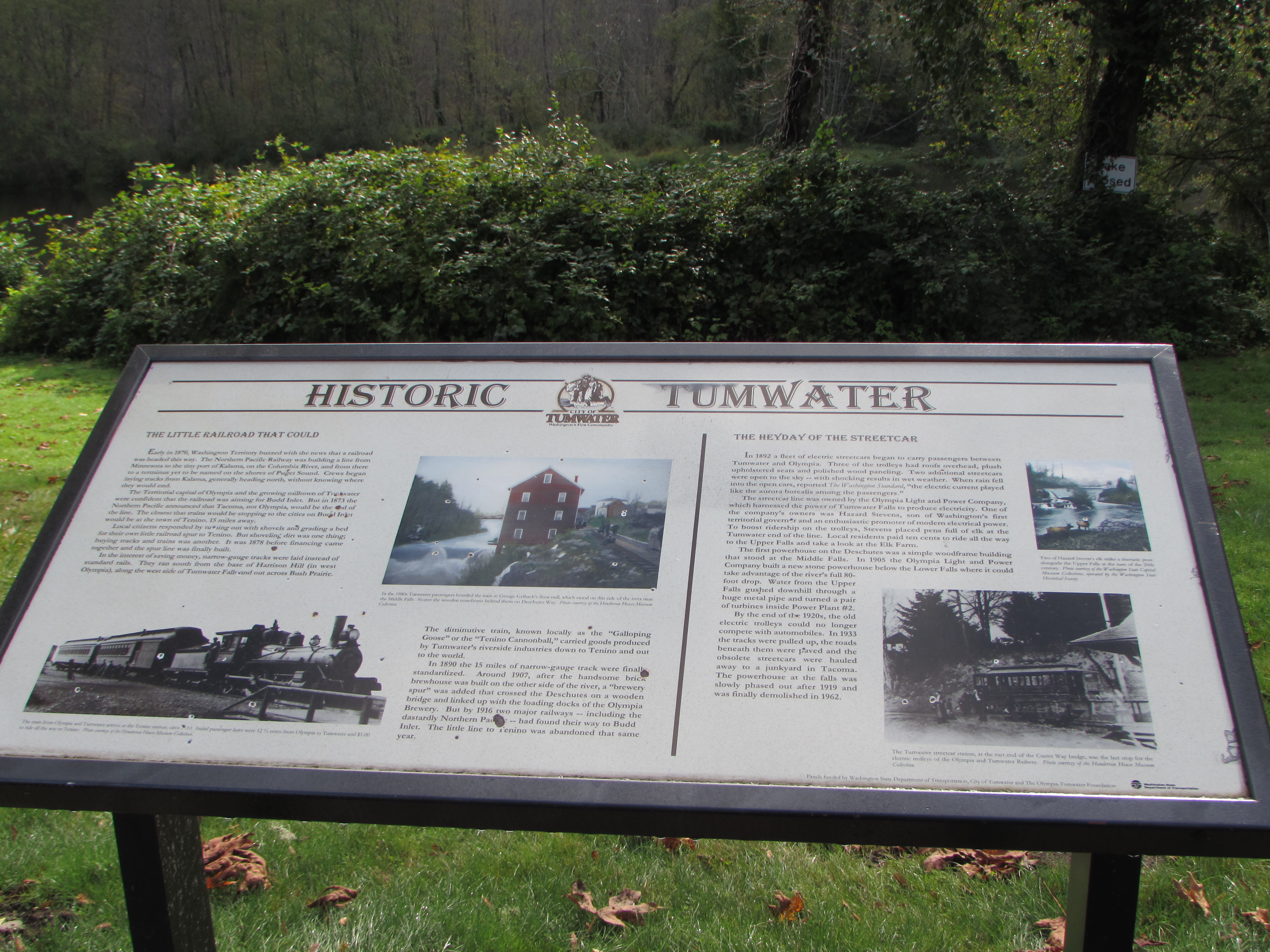
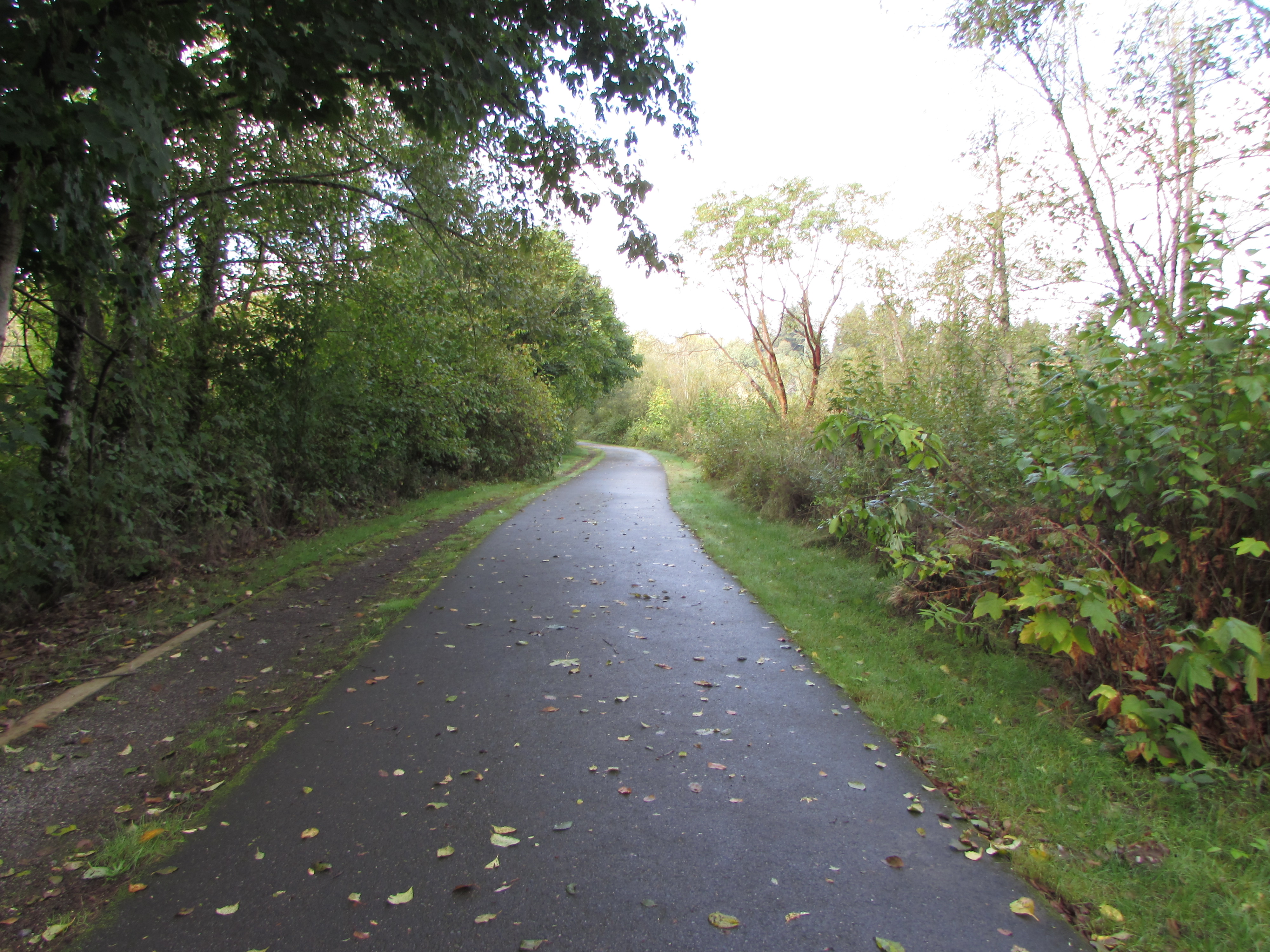
Today I step for the first time onto the path in Tumwater Historical Park, and there is nothing but delight all around. Breathe in, and the crisp smell of water-plants-mulch-dirt-leaves-flowers-moist air gives a refresher that must be more healthy than a million daily vitamins.

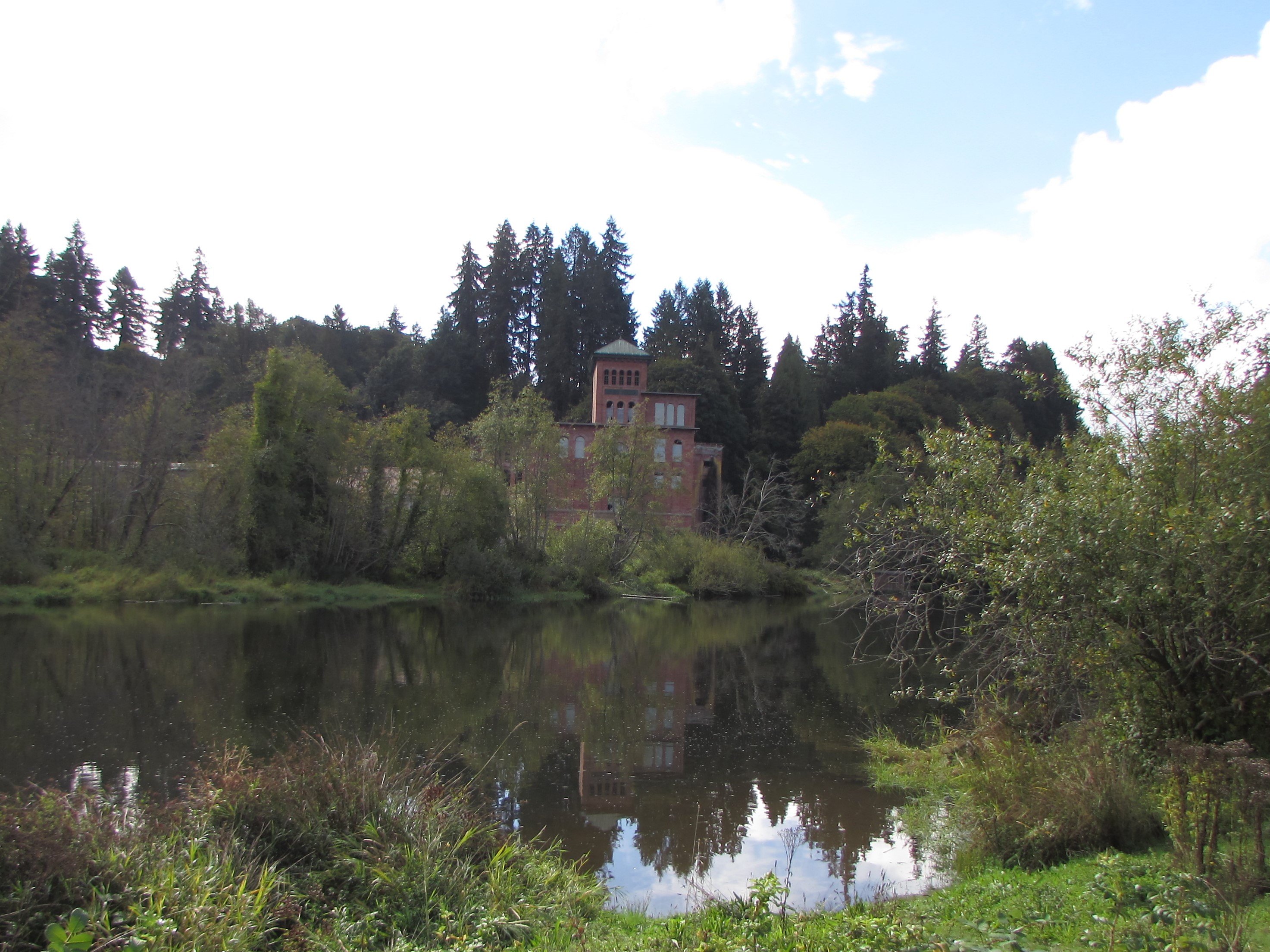
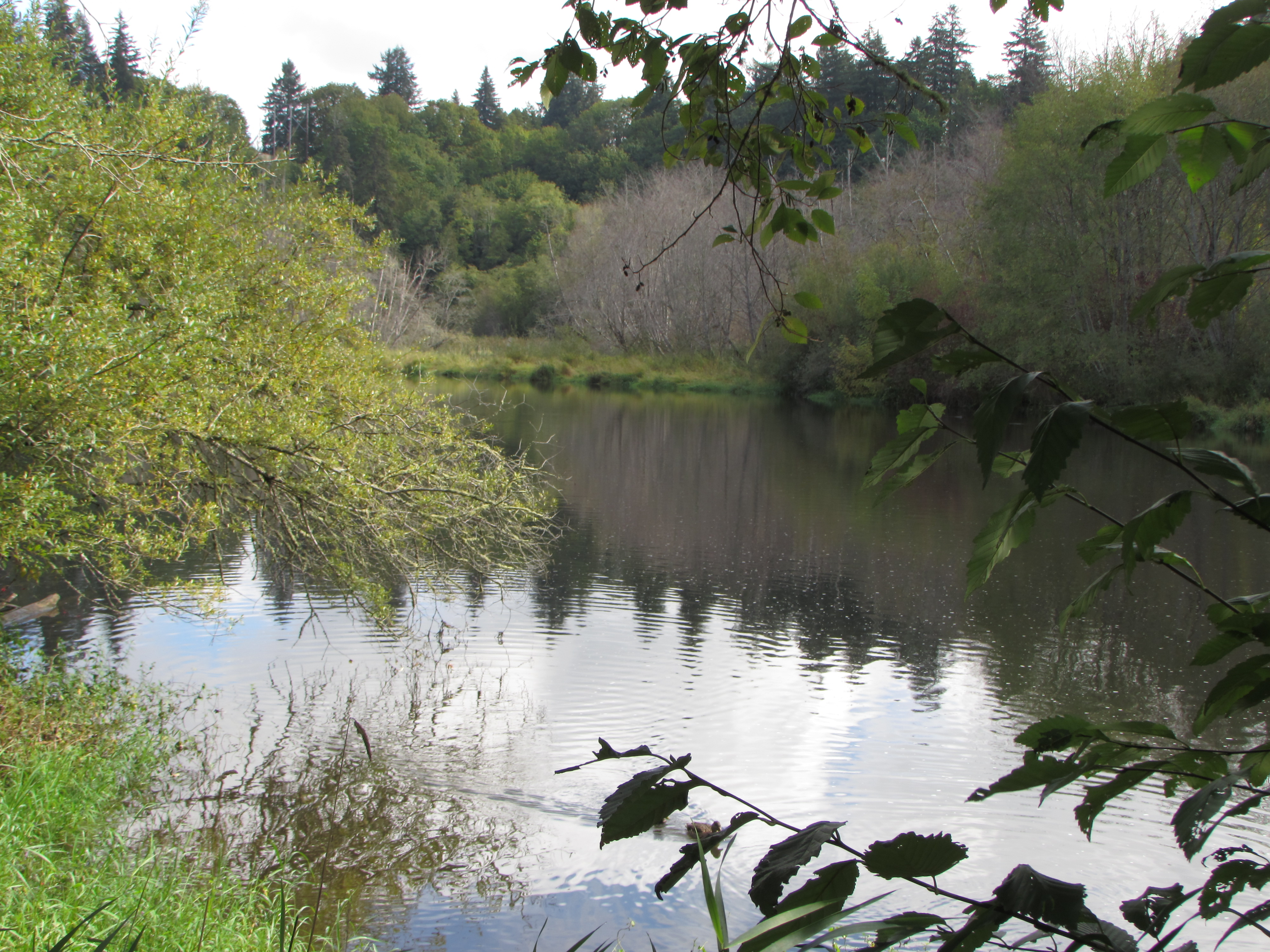
Photos do that wonderful trick of being perfect without any magic from me – not that I know how to put magic into pictures. The water reflects the image of perfect trees, perfect geese, perfect ducks, perfect buildings. Around the curves in this path, bushes arrange themselves into perfect arbors and before I can wish they were there, docks jut into the lake for me to walk upon.

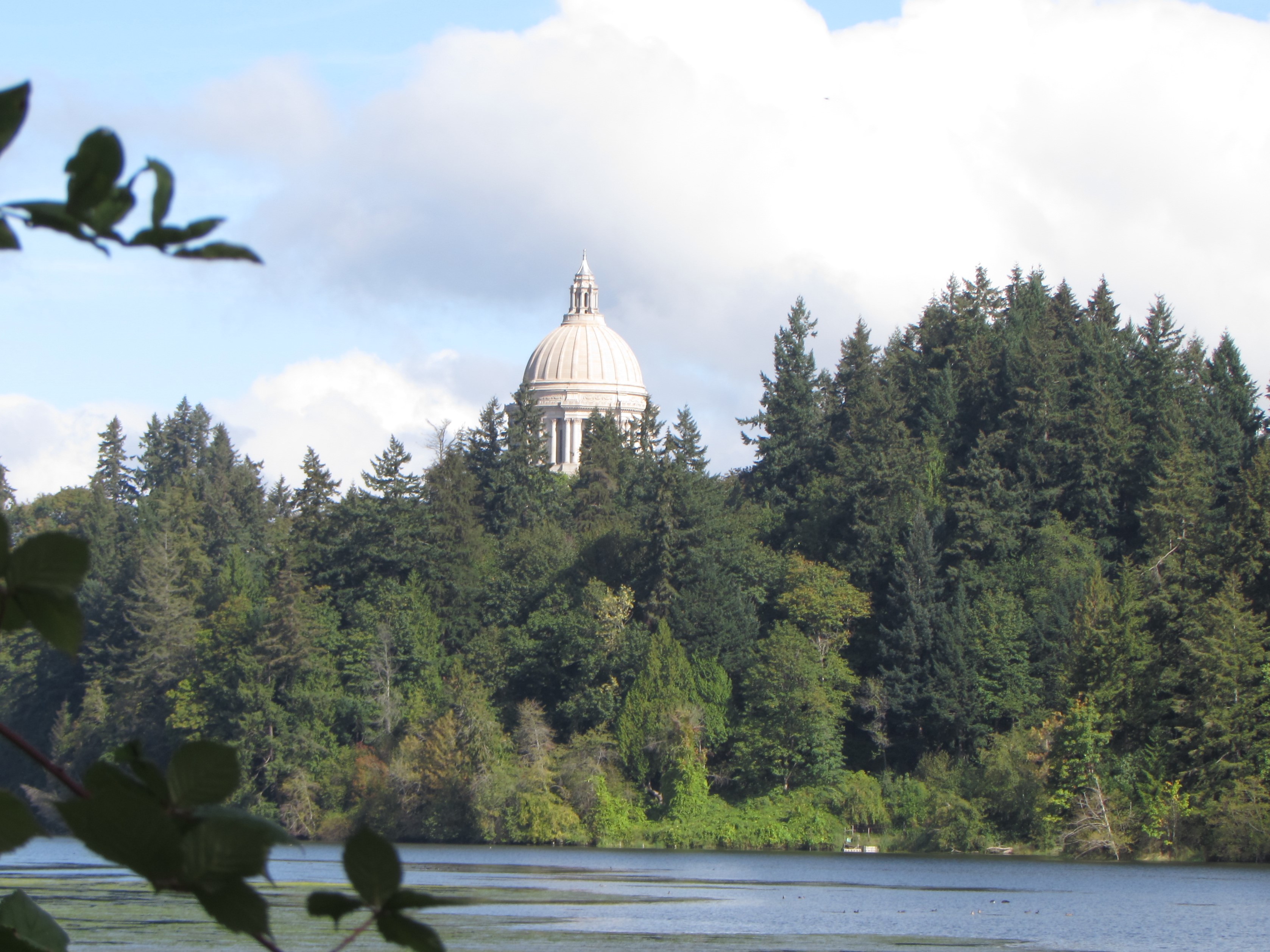
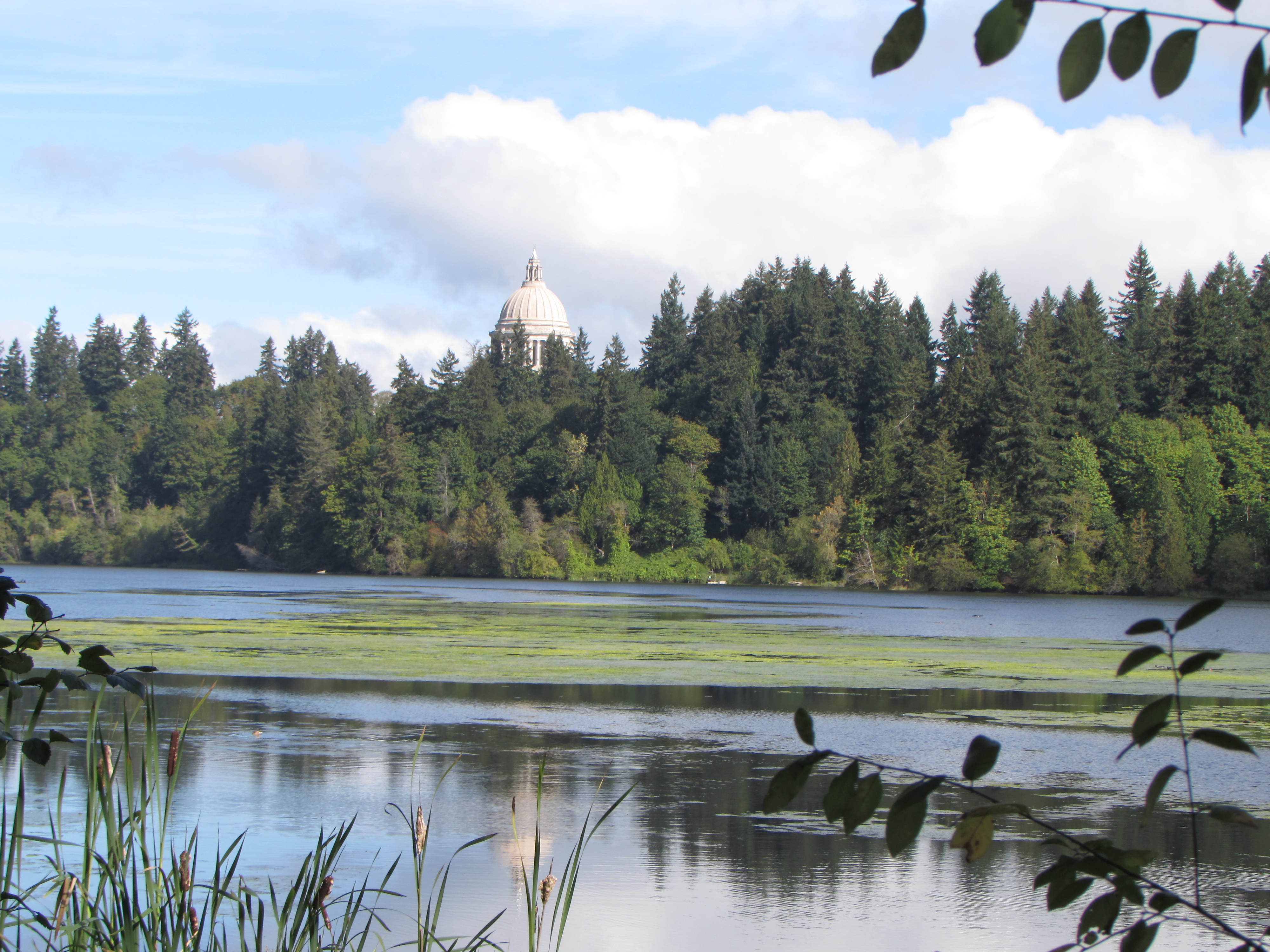
I walk under Interstate #5, a phenomenally busy highway, without noticing any traffic noise. Maybe it’s there, but my attention is pulled ahead to Capitol Lake and a perfect view to the State Capitol building. The pathway is just busy enough with fellow walkers to keep me company, without blocking my views or making me run from crowds.

Walking is a physical venture. Sometimes that is enough. Every once in a while, though, a walk comes along and offers more than simply putting feet to ground. That this one came during my first fall here is just perfect.

Walking for Blackberries

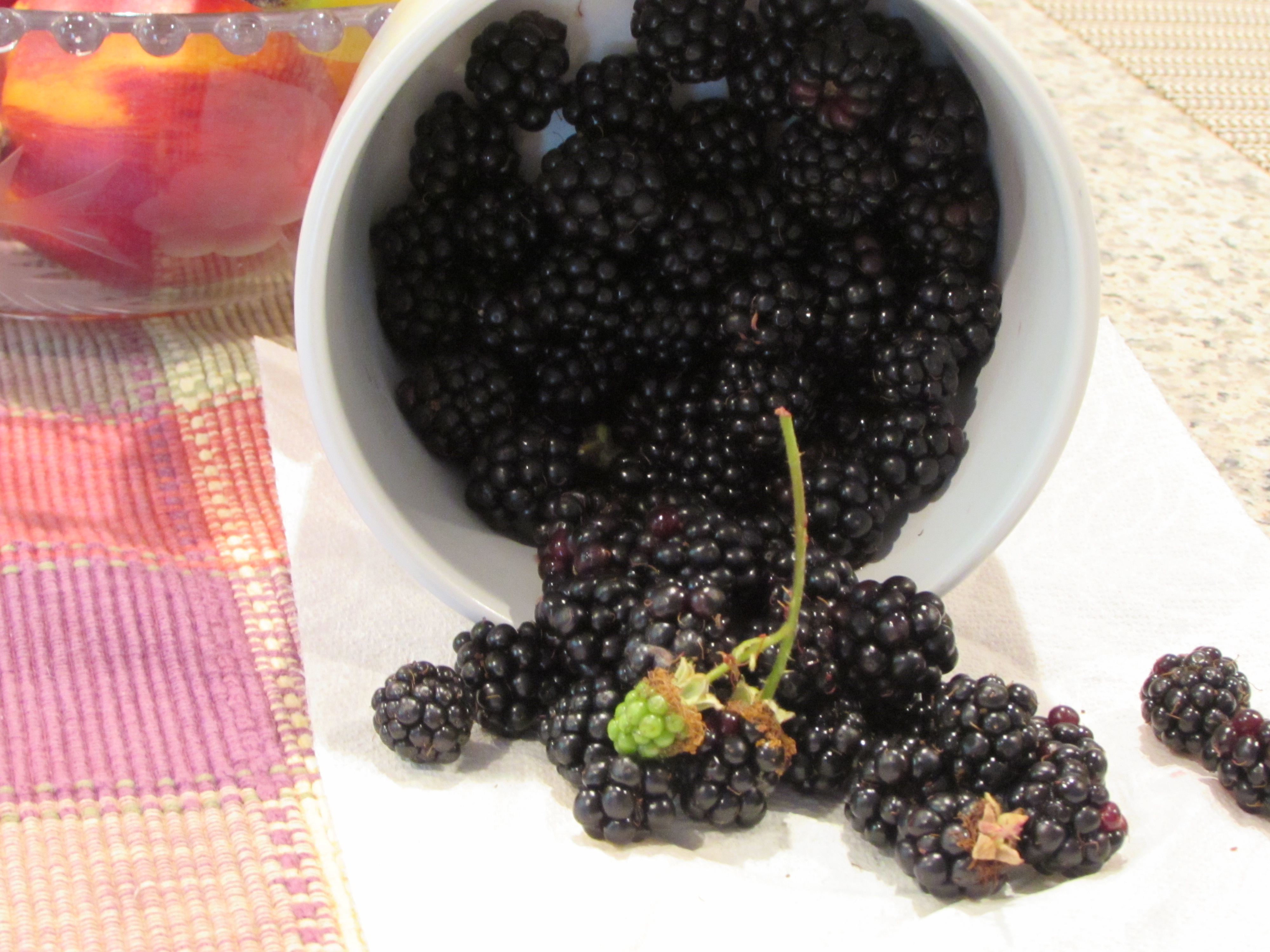
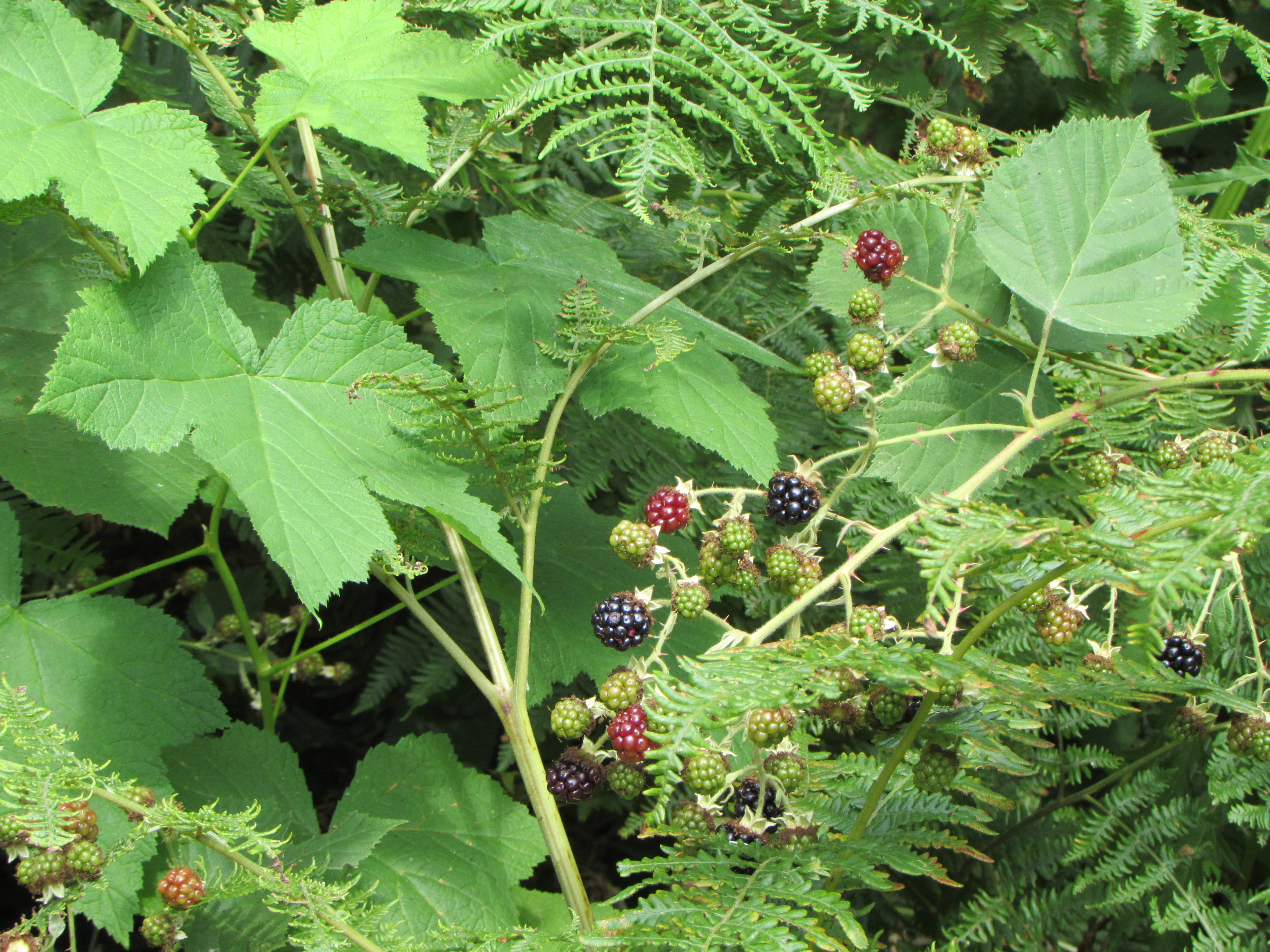
Sharp flashes of brightness hide behind branches and foliage. Shining in the sunlight, the fruit lay dark against the green leaves of the hillside vines. Wild blackberry harvest is coming.

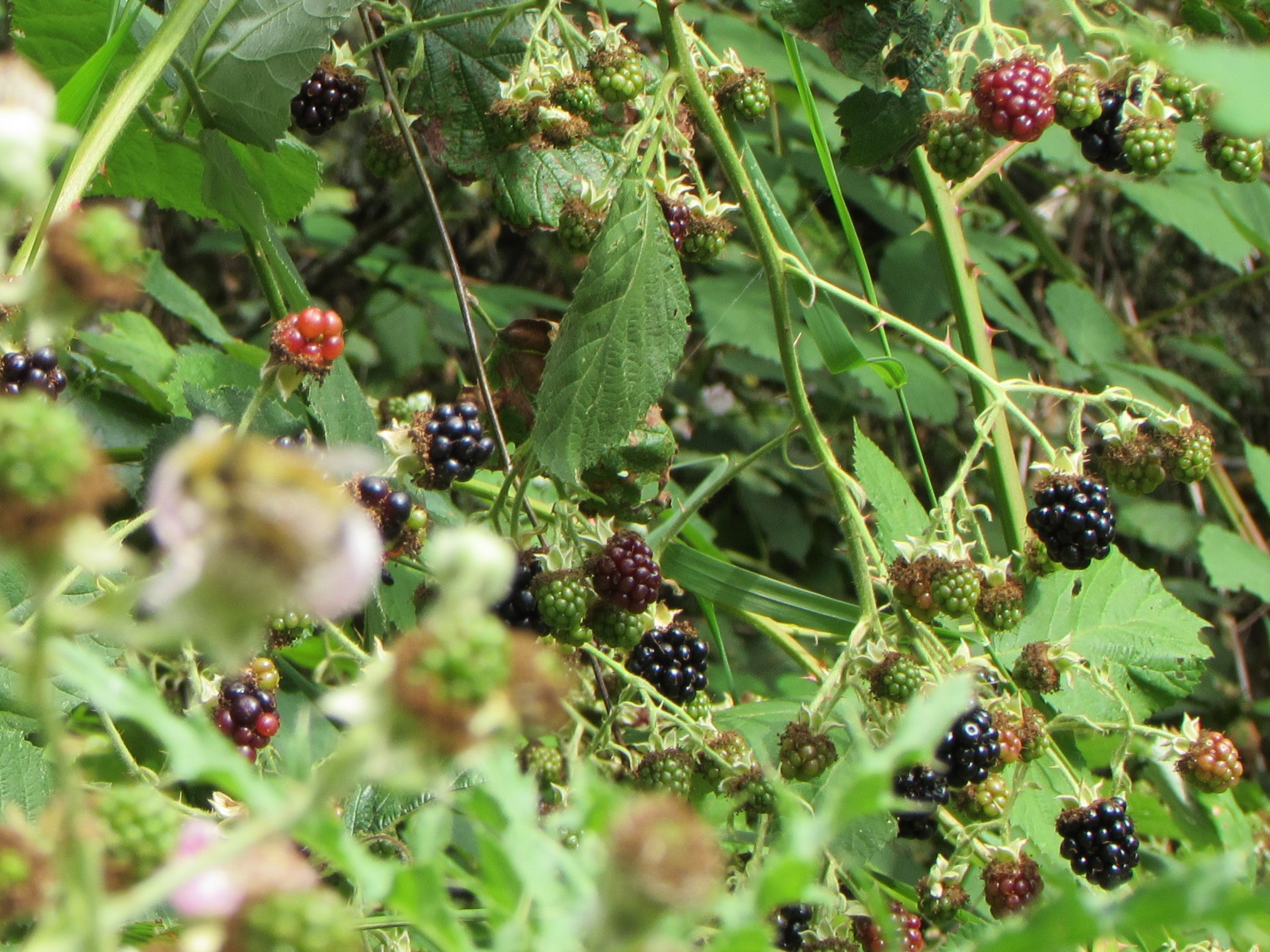
Being new to this area, I hadn’t known exactly what would spring from the vines I had been walking by for almost five months. First, I saw the woody clipped vine, then small new green buds, then tangling arms of leafy berry vines. Knowing USA’s Pacific Northwest is famous for its berries, I hoped for the exotic salmon berry. But I also knew that blackberries were better at growing in the wild. Then, as I saw the black globs mounting bigger and more numerous against the vines, I knew I could celebrate the abundant blackberry, tart and sweet.

But I didn’t know the berry-picking etiquette in this neighborhood of hillsides owned by everyone. For several days on my walks, I watched people inspect the vines. A few days later, the first neighbor returned with baskets. A day after that, I counted eight different pickers taking berry bounty from three different areas of hillside vines. On my next walk, I brought along my own small basket.

I knew to be careful. As a child, I had picked wild berries in the hills of the Northern Sierra Range in California. As an adult, I savored the Southern Sierra mountain berries. The vines guard their sweet fruit with hairy stickers that sting with more fury than their size should be able to hold. Did I see my neighbors wearing gloves? I should have remembered that little trick to berry-picking. But my small supply of fresh-picked berries gave me only one sting. I escaped home with a nice supply of shining blackberry harvest. Berry, berry good.

Today, I walk again along the sidewalks that border the berry hillsides. I haven’t brought my basket, thinking that berry harvest is a rapid season and I may have missed my chance for a second pick. I turn onto a slightly different path than my usual and begin a walk around a gravel section of a neighborhood park. There are vines alongside the path here, and I notice the dark berries have been harvested. But as I walk closer, I also see that a second offering of green globs hide behind the leaves, waiting to ripen. Berry goodness will deliver a second offering, just one more welcome to the neighborhood.

Walking small

An American friend who lived for years in India tells the story of her first successful experience wearing a Sari, the traditional Indian women’s clothing. She was tightly wrapped into the fabric by a Sari expert. When she complained that she couldn’t walk in such a confining garment, the expert said “Take smaller steps.”

I am living this advice right now. It might be a philosophical outlook on life, or a good recipe for putting one foot in front of the other. No matter how I look at the moral of this small story, it fits. My walks now call for smaller steps than I am used to. Even the territory I cover is small compared to walks I have taken in the past.

I take a step and appreciate things I wouldn’t have seen five months ago. I remember the place where the bunnies hide, where to get the best view and how to avoid the crack in the sidewalk from all the past times I have come this way. I know how fast the plants grow and where the roots of the biggest tree loop over each other in a braid. Smaller steps give me the chance to be grateful for some simplicity in life and the fact that I can still get up and go.

There are so many things to look at when I am looking for details. Just three feet away hovers a huge bumble-bee-like creature. Its chubby body stays suspended mid-air. Two tiny frogs jump out of the wet grass, and bounce into the weeds. Weed or unknown local plant? Or both? If I study the growing things for a moment or two – or three –  I can activate my memory enough to investigate with my northwest plant guide when I get home. It’s a luxurious feeling, taking my time and slowing my steps.

 I notice I am measuring in units much, much less than a mile. In front of me is a curving stone path and I wonder if I can build something like that in my own yard. Three paces uphill and I see the berries are ripening on vines that have been growing since early spring.

Maybe I can even have a walk in my mind, and maybe that can be enough. So many great walks are there for the imagining. Or even remembering. Inside my head is a mental recycling plant that lets me enjoy rambles twice. In fact, it’s a good investment: Next time I go on a walk in a new place somewhere far away, the routine won’t be such a rusty old process.

Is your walk philosophical, real, or a nice blend of each? Is it long or short, and does it change with the seasons? Stepping out of our usual habits isn’t all bad – it’s something to think about next time we put one foot in front of the other.

Long walks or short, large steps or small, it’s up to each of us to keep going in our own way. Maybe we can’t make the Saris of the world adapt to us, but we can do small things to adapt to the world. If I can hear a great story from a friend along the way bringing me laughter and making me think, all the better.

Thank you, Ann

Walking the urban forest

It’s heaven-sent. During this time of boundaries closing tight, someone had the foresight to keep pathways open. A person I don’t know, about 20 years ago, designed an urban forest to help me today celebrate the natural world. More precisely, someone made it so the forest that was already here wasn’t swallowed up entirely by new homes. I am a lucky sort today, because that space is where my walk takes me.

The pleasure of being able to step from concrete sidewalk to crushed granite path into soothing coolness gives me a moment to pause. It’s a quiet walk, no others within ear shot. Perhaps it’s the time of day – mid afternoon – when every creature takes a rest.

Except me. With each step into the shade, the distant freeway traffic hum, the occasional whirr of small airplanes, the in-and-out of neighborhood inhabitants, all these usual every day sounds are muffled, then fade, then are gone. A simple quiet surrounds the magic of light passing through a split branch of moss-covered old pine, the tender changes in green from tiny leaf to stem to vine, and the delicate yellow and pink of blossoms I haven’t yet named.

The route is adventurous. The trail veers down and makes me evaluate my mountain climbing skills. It’s a mini-mountaineering escape in a twenty-minute time capsule. Other walkers have slipped, leaving their mud tracks in three-foot long skids. I decide to scoot over to the edge. I side-step my way down, cushioned by a layer of old pine needles, crushed brown leaves and the wisdom of being in my sixties with no desire to see if I can recover from a slide down 30 feet of forest. Luckily, this particular path is kind. It exits the forest onto a separate side street and into the neighborhood without needing a return hike back up the slick incline.

But not before I walk through the section I have named Fern Gully. How did these living things survive an ice-and-cold winter? They sit to the side of the trail, ferns more delicate than the tatted-lace doilies my grandmothers’ mothers used to make. Right now, just entering full summer, they have uncurled finger-tipped leaves with hairy undersides in shades of the forest that change as the sun passes by.

Now, the trail feels like the backward beginning of my stroll: into the full sun, onto crushed granite, then hard cement sidewalk. It’s easy to think that the walk, so simple and small, was just a mind’s adventure, just a moment to escape a worried planet. I wonder if I’ll be able to find these peaceful footsteps next time I need an escape. But I smell the lingering pine and cedar, and don’t have to look back to know it’s really there.

As my walk ends, I step through a baracade of trees that reach up 100 feet and into my backyard. The fat leaves of a tree I still cannot name hang down to shield the sun. Climbing onto the small hillside of my back yard, I am home.

Thank you, urban planners. You made today’s walk a welcome relief  in an up-and-down world.


Please join the Monday Walk with RestlessJo and friends:

Walking Buenos Aires, Argentina

Listening to visitors pronounce ‘Buenos Aires’ is enormously entertaining. People from Britain say ‘Ahhhres’, giving the word the sophistication it deserves. People from the USA say ‘Air-rays’. It’s a simple switch for them: just adding ‘rays’ to the already familiar word ‘air’. Curiously, travelers don’t seem to confuse ‘Buenos’, but there is already enough intrigue about the city. Buenos Aires itself is even more entertaining to travelers than its name, and everyone should visit.

This is my second time in the city; the first being over 40 years ago. I don’t dance the tango, I don’t eat pondorous beef meals (though the person walking next to me might like to.) But, now as 40 years ago, I find endless ways to entertain myself. This is one city where anyone can feel like a Porteño – a resident of Buenos Aires.

Some cities are strategically breath-taking, placed in an area of great beauty, like Bogotá, Colombia. Others may be located in a convenient area, like Panamá City, Panamá. Some communities spread like wildfire, consuming geography without apparent logic, like my former hometown of Pasto, Colombia. And some cities, like Buenos Aires, plot their own thoughtful development with grace and beauty, replacing topography with a vibrant and classic style that begs people to visit and effortlessly impresses them when they do.

We arrive from Lima and I pull out our hotel information. I am not always good at selecting places to stay. We are thrifty sorts, and like to get as much for our money as we can, but while we look for safety and value, location of the hotel is always our first concern. Can we walk to the places we want to see? Are there restaurants and stores close by?

The taxi driver knew the hotel right away, without the need for an address, which is a credit to him, and gives me hope that this time, I picked well. It is a hot day in Buenos Aires, and we drive into a neighborhood with a canopy of green extending over the city streets. The taxi pulls up along a shaded sidewalk to a shiningly clean hotel with ornate stately features. Melia Recoleta Plaza. It is classically beautiful, and I decide immediately that if I only explore this one building while in Buenos Aires, the trip will have been worthwhile.

The hotel has taken over a structure that was once a rooming house where Eva Peron lived. With curving staircases, gleaming wood accents, polished marble tile floors, this place acts as a living museum. Placards placed on framed photographs tell the history of Peronista Argentina. In black-and-white, next to the period architecture of the building itself, a history lesson begins before I unpack my bags in the room.

The area of Recoleta is home to our hotel. Even if tourists didn’t need to visit Evita’s grave in La Recoleta’s cemetary, they should come to see this neighborhood. The graveyard itself is a walking history tutorial, with cultural lessons displayed on tombstones. Decorations and poetry add details. Outside the cemetary, the shaded streets and the welcome of the cafes make walking a simple pleasure here. Carrying our map, we are stopped several times by residents who offer help with directions. One recommends that we visit the artisan fair in the park. We do, and find a huge gathering of craftpersons and shoppers. We are entertained for hours. Since I have decided that visiting Buenos Aires requires more than seeing the interior of the hotel, I now wonder if I really need to leave La Recoleta. The area is peaceful and inviting, surely sufficient for any visit.

But I do explore farther. El Ateneo Grand Splendid is just outside La Recoleta. In 2019, it was named the most beautiful bookstore in the world by National Geographic. When I walk into the store from the sidewalk, I wonder about the hype surrounding this famous place. I like bookstores, and have high expectations for the well-known ones. This one opens up from a fairly normal city street. It’s fine. But number one in the world?

And then I see the interior and understand. It’s so filled with architectural beauty that it’s difficult to focus on the literary works of art. This is just one more spot in Buenos Aires that can occupy an entire visit.

Of course, there are more. The walk to a popular shopping street, Calle Florida, from our hotel is a long one. In the heat, I wonder if my insistance on walking everywhere is wise. But how else do I see the sights I want to see at the pace I want to see them? The reward is in the shops along the street and the vendors with their goods on the sidewalk. And, of course, along the way, we stop in the shaded parks near the Casa Rosada, where the city’s political history has unfolded.

Every neighborhood we pass through and each restaurant and shop we enter, we encounter friendly, helpful Porteños. When we take a short break to sit in the shade of Plaza de Mayo, twice people approach and offer help with directions and recommendations. It seems to me the people of Buenos Aires want us to visit and enjoy the city they very obviously love.

That is the lasting impression I take with me from our second visit. I can stop worrying about pronouncing the name right. The important thing to remember is that Porteños love their city. This emotion spills out to welcome visitors like myself. 

Walking Quito, Ecuador


A cab from the bus station takes us toward the center of Quito, where we will be staying for several days. With over two million residents, it is no surprise that this city has neighborhoods of normal busy-ness, where life goes on along graffiti streets with too many vehicles. I think we are driving through most of these neighborhoods on our ride today, and marvel at the new yellow school buses, the traffic lights that impose order and the general rush I notice in the streets. We pass through bleached-out urban spread and then up-up-up to the high plateau of historical Quito. 

Once we reach Hotel Casa Gardenia, in the center of the city and settle in, my impressions change. Urbane, international, less hurried, welcoming.

But all those descriptions of Quito – the bustle and the serenity – surprise me. 

The last time I was here, traveling in a pack of two or four or six hamburger-starved young Americans, we sought out Rusty Burger the moment our feet hit the last step of the bus. We ate hamburgers translated into the South American experience and called them glorious. We stayed at a ramshackle hostel that was often packed to the brim with Peace Corps volunteers – like ourselves – and young back-packing world travelers from countries I had never been to. The streets of Quito I came to know 40 years ago had been a mixed-salad of old cars, old horse carts, aging homes inside tall stucco walls, and newer buildings along one section of a street near the hostel. It was a small landscape that I came to know well. I visited the historical section of the city only once or twice, after I had eaten my fill of homesick hamburgers.

Today, our hotel, built into an ancient building, lies along a curving and narrow cobbled street, and is guarded from that street by a thick wooden door from Colonial times. But inside, a modern glass-and-chrome structure offers a massive picture window that frames the entire central square in one gorgeous view. A storm approaches as we check-in, then passes by, cleaning our perspective and setting up our visit to be just as new and refreshed as the view itself. 

Our location offers an easy walking-tour visit to old Quito. We start out holding a tourist map and head down, down the narrow street. It contracts so much at one point that we have to yield for cars. At another passage, the sidewalk has steps that simply dissolve into a gutter from the 1700’s. We walk through a tunnel of stonework from that era, as modern cars compete with us for space.

Then we are at the central square. People call it the Grand Square (Plaza Grande) and Independence Square (Plaza de la Independencia). Ancient stonework continues from the street, but the square itself blooms with color from plantings of flowers mixed with grassy sections and lush trimmed bushes. People are everywhere: walking along, and sitting on the grass and on benches. Massive two- and three-storey buildings line the square, each with a historical purpose: the cathedral, the presidential palace, a grand hotel.

The building that attracts us most is the Archbishop’s Plaza, and the reason we choose this place is predictable. We are in search of food. Inside this former residence of Quito’s archbishop is a beautiful warren of tourism. The interior of the building holds several patios, one with a quintessential fountain, another with a zigzagging covered walkway. There are hallways linking the interior patios and enough entrances and exits to confuse any visitor. And there are restaurants.

We have a hard time deciding which menu to choose, and end up taking a table on an upstairs outdoor patio and eat a wonderful humita ( similar to tamales.) Another rain storm passes as we eat, and the patter of the rain into the interior courtyard is exactly enough to bring a pause to the day, but not enough to change our plans.

After the meal, we continue walking downhill to the city market. The two-story concrete structure contains fruits, vegetables and every imaginable meat. Cascading boxes are hidden behind multi-colored produce: purple and yellow potatoes, orange- and white-speckled corn,  light red-skinned plantains. Because there are ingredients, there are also food stalls. Fresh juices, roasted whole pig, llapingacho (stuffed potato patties.)

There is so much more to see, and we have some days to catch our memories of this city we had loved. Forty years later, I am joyful at discovering this modern transformation of Quito. Eating hamburgers from home seemed important at one time. And maybe that is a good personal memory. But Quito itself is so much more than Rusty Burgers, and I am very happy to know that now.


Please join the Monday Walk with RestlessJo and friends: