Walking Los Olivos

Lush is not a word I normally use for the hills of California’s coastal range. The seasons here too often turn to dry golden grass. The leaves of the native Oaks are small and the bark freckled with cracks. It is a landscape I adore, one I grew up around and still consider a gift from nature. But this landscape is not best described with extravagant words: lavish, plush, generous. It can be harsh and barren. But if you visit Los Olivos in the spring, it may surprise you.

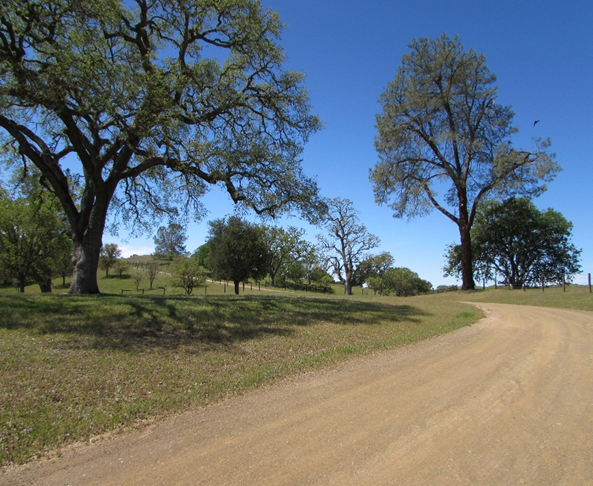
The town surprised me. A simple few minutes off Highway 101 through a drive that was absolutely lush, the town fit the landscape of the region. Country-like lavish, polished clapboard, inviting. It’s a gem nestled in the rolling hills of Santa Barbara County. Known for its picturesque atmosphere, this town’s rich character offers an escape from everyday life.

My walk began at the Corner House Café. Central Coast Beach Boardwalkers, a club of the American Volkssport Association, kindly provides a map of two walks in the community in the brochure display inside the coffee house ($3.00 donation, no online access.) One is a 3.1-mile walk, the other a longer 6.8-mile walk. I was here to explore the downtown area, so I chose the shorter walk, though the mini-horse farm on the longer route tempted me.

The town is peaceful. Early morning sun poked over the hills, but with a soft touch. The slow pace here encouraged me to take my time and absorb the details. The walk took me past Los Olivos’ historic architecture. Old buildings, with their classic façades and quaint storefronts, tell yesterday’s stories. I paused in front of the Los Olivos General Store, a staple since the late 1800s. Many hands had turned its doorknob before mine.

As I strolled, the scent of freshly baked pastries wafted from a nearby business, and I couldn’t resist. Buttery croissant in hand, I sat on an outside bench, savoring the warm pastry, watching the town’s residents go about their day. There’s a certain intimacy in this experience—sharing a moment of simplicity with the community.

Los Olivos is known for a vibrant arts scene. My walk took me past several galleries, each showcasing the work of local artists. One particular gallery caught my eye with its colorful paintings depicting the landscapes of the region. These works captured the drive I had just finished and reminded me how fortunate I was to experience this scenery firsthand.

At the edge of town, I could see nearby vineyards stretched out in every direction, their lush greenery on display. Los Olivos is more than just picturesque; it is a place where history, culture, and nature converge to create an inviting atmosphere. The simple act of walking through its streets allowed me to connect with both the town and myself in a way that enriched my walk.

Slow down, savor the moment, grab a map from the Central Coast Beach Boardwalkers and stroll. In this small corner of California, I discovered not only a picturesque setting but also a sense of belonging and peace that is often hard to find in our fast-paced world.
Walking Montaño de Oro, Point Buchon

I’ve been hoping for a lot of things lately. Hoping to make plans that don’t need constant revision. Hoping for new places to go. Hoping for more walks that take me long into the hills or along the beach through the dunes. Longer walks that stretch my calves and work my lungs and teach me to breathe. I like stability and routine, but sometimes a little change helps everything in life.

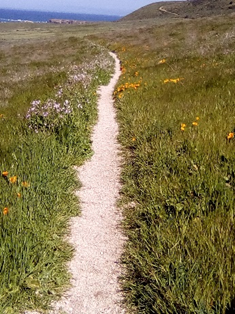
Just around the corner is a place that gives the possibility of a longer walk. Montaño De Oro State Park lets everyone ramble however they want. There are crushed granite trails, asphalt trails, trails along the edge of the ocean and ones straight up mountains. The path south along the coast toward Point Buchon, way in the distance, calls to me. I haven’t yet walked it.

The trail winds its way, out there beyond where I have ever been, a trail that runs up the hill, around the bluff, and disappears into that softly turquoise sky. In the spring, the long path is a warm earthen line between mint-colored grasses with occasional gold from poppies or goldenrod wild flowers. I see it from a distance. The path invites me like all those routes that wait impatiently to be walked, while I test out my footwork and the strength of my laces or the time until my next obligation or whatever else is keeping me from setting out for a long stroll.

It’s a good challenge. The curve of the pathway is so far off it disappears from view, marking the spot that is probably half-way to the point where I plan to turn around. Some walks that I’ve never taken, like this one, I think about and design a route and re-think and design again until I can put foot to path. The road will be similar to others I have taken but not exactly the same. I know the trail will be a worthy one, if only for the freshness of the air.

Our lungs know what is good for them, and this air is their dessert. Deep breaths are on the menu. Replenish your lungs, relax your mind, calm your heart with those long measured breaths. Good health waits for me on the long walk into the hillside along the Montaño De Oro ocean cliffs. Shorter walks around the area have taught me what I might expect on a longer hike. Seven miles, eight, maybe nine or ten by the time I take the return trip. What’s keeping me from this long walk?

I’ve been reaching for a more demanding work-out inside my walking self-therapy. We all get into times when we have too much sameness. The same wake-up time, the same breakfast, the same walk every day. All of that is good, but there is also goodness alongside a challenge. I have held onto this quest to take a long walk for quite a while. It’s a forever to-list that hasn’t been done. Is there a rush? Do I need the pressure of a mental reminder that I have a goal I haven’t reached?

One step after another – this philosophy makes my life simpler, and when I remember it, it makes my life better. But sometimes the simple way of looking at things needs a second look. Sometimes, life isn’t simple. Right now, as I plan that long, long walk, my heart says ‘go’, but my hip says ‘no’. That’s when I have to remember that even many small walks to long places will get me there, eventually.

Walking the Refuge by the Sea

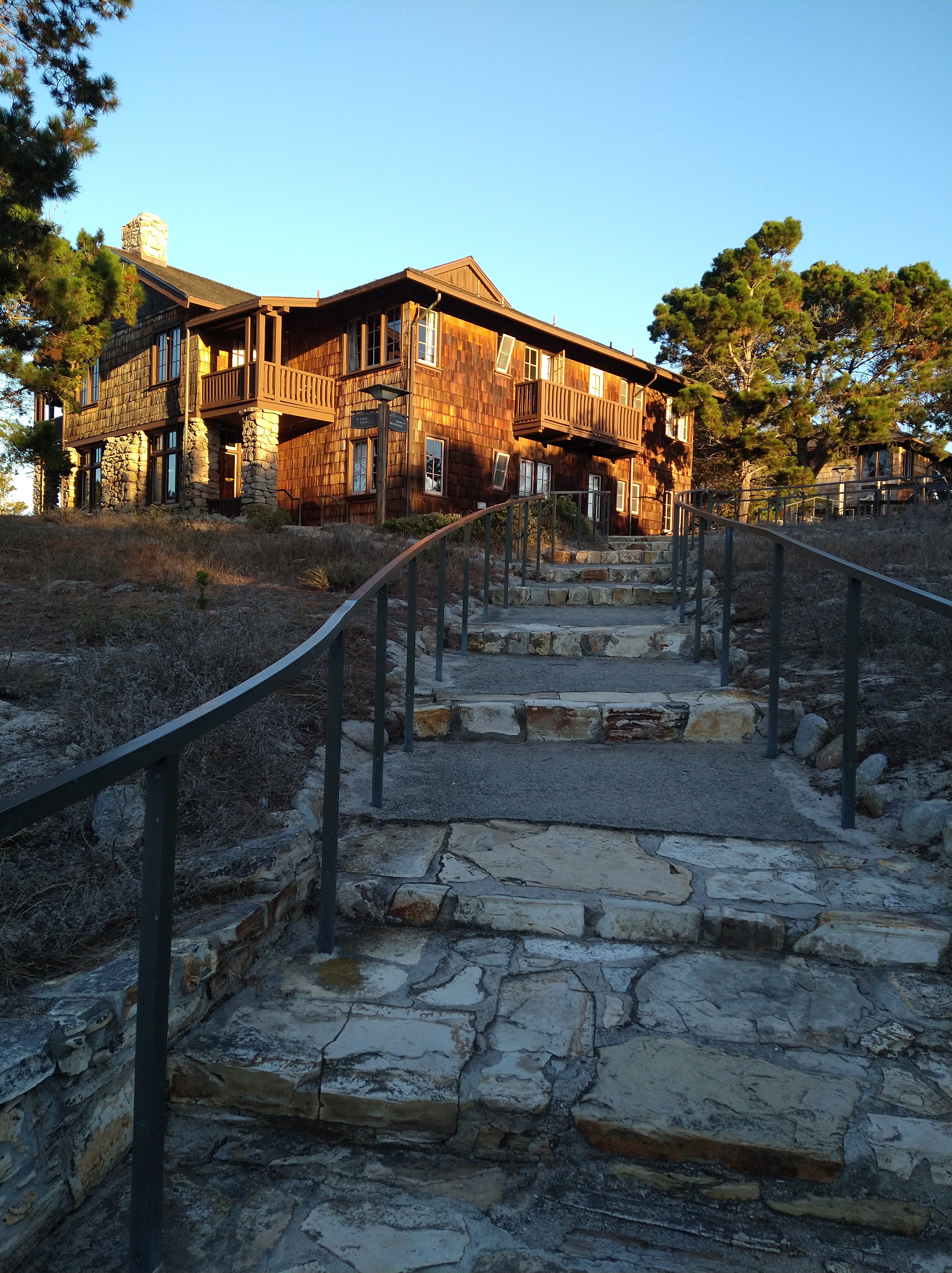
One place along the California coast pulls me back time after time. Stone walkways from the last century, historic buildings, and boardwalks through dunes appear like wishes from a better life. The place is called Asilomar, or Refuge by the Sea. If you are looking for tranquility, this is a good place to start.

A short two and a half hours from Estero Bay, Asilomar rests between Pacific Grove to the north and Pebble Beach to the south. It is owned by the State of California and there for anyone, anytime to come and walk its pathways. This open-ended invitation offers a rare sense of welcome. There is no entrance fee. You will find no entrance gate. If you wish to be there, you have simply to walk from one existence into another.

The refuge calls to wandering folk. The climate and fresh air revive you. Wide pathways crisscross the grounds. You can pick any route and wind up somewhere that is a complete surprise. Stop along the way and admire rustic buildings on the grounds. Even if you feel lost, you won’t be for long. Just continue the loop and you will return to the spot where the trail began, with a sense of calm that is Asilomar’s gift to everyone who walks there.

This refuge keeps the natural geography so that as you walk, it’s a reminder of what coastal California looks like untamed and undeveloped. The dunes shift daily. Plant life follows a craggy growth, sculptures-in-the-making. Tiny flowers bloom in the sand. Wooden walkways give you the right to step into a place that only asks you to be at peace.

The trail from the center of the property to the beach will wait patiently for your footstep. Sit on a lawn chair in front of Hearst Social Hall before you go or when you return, the choice is yours. Sooner or later, though, you will choose to follow the call of the Pacific. Walk to the bluffs above the beach and take in the extensive ocean view before you return to the Asilomar grounds. Or you can continue to stroll along the wooden boardwalk north on the bluffs fronting the ocean. Really ambitious walkers can hike to Cannery Row in Monterey, the next-door community. You can also add a tidepool to your adventure.

My favorite walk is to take a right-hand turn onto the pathway off the main boardwalk just before the beach. You are still on Asilomar’s compound, heading up an easy incline. Once at the top of the dune, you can walk along a ridge, or take a seat on a bench. This boardwalk also offers side-trips for exploring. One of the walkways takes you to an end spot where you can sit, especially at sunset, looking north past a wooded gully, south to the long curling beach, or west onto the ever-present roll of the Pacific.

Most walks are the daily habits of people on-the-go. Routine, known, and often appreciated, these customary treks help our days have meaning. Others challenge each person in different ways: a physical test or a mental task. Any walk you take in Asilomar, this refuge-by-the-sea, will transport you to a place that, with one small step onto the grounds, brings an enormous sense of peace.

Walking to New Familiar Places

Morro Bay State Park Museum of Natural HIstory

If life is a story, the walk around Morro Bay State Park’s Museum of Natural History would be several chapters of mine.

Many years ago, maybe when I was not even a teenager, I traveled to this area with my parents. I remember being surprised at the golf course adjacent to the park, only to turn around and see there was something more to explore up the hill towards the bay. The stone pathways, the eucalyptus grove, the muddy beach seemed to mix into a jumble of memories about a place where so many things that shouldn’t be together existed side-by-side.

Then there were the visiting years, when I would escape the heat of the valley with my own young family. On long walks from the town of Morro Bay, through the nesting heron rookery, and up the stone walks, we would spend time in the Museum itself. Reading the history and looking at the photos gave us some good information and a rest stop. After all, we had a long walk back into town.

Today’s walk, though, is longer and more solitary. As a woman approaching seventy, I climb up past the museum onto the crumble of sandstone paths with only an occasional step-worn stone to steady me. The routine of walking to the back of the museum, around to the side on the path that winds nicely above and along White Point, then down to the estuary marina, is now a part of my life. I sit often on the wooden bench looking over the stone border wall to the tides coming in and then leaving the bay. I see people putting their kayaks into the water at the end of the public launch and watch pelicans hunting above the schools of fish. But I have not ever walked up to the crest of the hill. I think I remember knowing that you can walk it. I just never thought that I would.

Today, I turn left onto the uphill path instead of following the worn path I had always followed before. I will treat myself to a new version of this walk and a new view at the end of the pathway. It’s not as safe a trail as the other, having less traffic and more rubble. I reach several places where the route ahead is unsure. It’s certainly less marked. But eventually, the path reveals itself and I find that there’s a wide marked area to welcome me at the top, and one last treat that out-surprises that first impression I had of this area so long ago. The view.

What can I say about a view that extends farther than I ever would have guessed? How do I write about the freshness of the air? I am really not able to describe the vitality of this perch from the top of a hill I knew about, but had never visited. I think it’s better that you go there yourself.

Walking Morro Bay’s Park Ridge Trail

Over the shoulder of the town of Los Osos is the Pacific Ocean. Shielded by a sand spit, Los Osos hides from that deceptive and ill-named body of water that is not peaceful even when it appears calm, as today. I walk at low tide east from the Pacific and watch the ocean’s fingers snake their way to the back of Morro Bay until the sand sucks out the sea water and becomes a soupy mess. It pulls your shoes off if you venture out in a kayak at the wrong time of the tidal day and need to step out to unstick your ride.

But today, as I walk away from the coast, I head toward Park Ridge Trail in Morro Bay State Park. It’s nice to watch the ocean from a distance. The path rises and falls around a hill that gives a magnificent view of the saltwater marsh in the shallow end of the bay.

Imperfect wildflowers lay along the path and up the hillside. Taller than me, the golden yarrow shines bright and the tiny baby blue eyes brush my boots. Some plants are vivid today, but remind me that the wildflower season is past prime. Cow parsnip, morning glory, sticky monkey flower, milk thistle and purple salsify are saying their goodbyes.

The hills today still carry the mist from the coast, making the air mild and my cheeks refreshed. The sun here is powerful and insistent, but waved away by the breeze. A green blush on the hillside won’t be here next time I walk this path. Even today, weeks since the last rain, the hills are streaked with golden. A change has come about from winter’s green. The waving ends of aging grass and flowers sway over the crest of the hill, a fading springtime pastel against the blue of a balmy sky.

I walk on a path that has been visited recently by a run of bicycles and many feet. A diligent maintenance crew has kept the main paths broad. Smaller, happenstance cutaways lead to places I didn’t prepare to see today. Most are made by adventurous hikers who know the area better than I. Once I get past the first hill, I realize how broad and expansive is this parkland. There are a dozen break-off paths, some posting legitimate signs: Quarry Trail, Crespi Trail, Chumash Trail. The named trails are blazed by the park maintenance crews, but many others are side-lined single walking jaunts that lure me to break the rules. But I know it’s best in all ways to stay on the cleared paths. Safer for me and safer for the creatures who live here on the hillside.

I see some of these: little rabbits, a couple quails, a buzzard flying above. I hear others:  a scampering away as I turn a bend, a swish around a tall bush, several bird voices I can’t identify. I also see many off-shoots of trails that these creatures have made, so small I am not even tempted to change my route. Running under, next to and through thorny vegetation, they seem to head toward a cleft of water that I hear but can’t see.

Getting to know this area, I have been so entertained by the sea: the constant sound, the soothing beach sand, the shallow tides I can slip my toes into every day year-round. I have been facing west for years, in wonderment at this ocean home. Happily today, I am discovering a walking buffet to the east. I can’t wait for my next ramble through these coastal hills, and wonder why my feet have been so long in walking this way.

Walking Valencia Peak Trail

It rises 1,347-feet from the ocean to the crest of the mount. Central California’s Valencia Peak in Montano de Oro State Park lies just a few miles away from my home in Morro Bay, and just a few rational thoughts away from a trek I should take. But my family has a now-and-again tradition of taking hikes during holidays, and many of those treks challenge the concept of what I should be doing at close to 70 years of age. I have done this walk before, so I already know that today will be complicated by a rocky path, gut-wrenching views straight down, and a slick granite dome that I will have to cross to reach that last, highest step in the climb. I don’t live dangerously with any amount of ease. But I am determined today to at least be in the vicinity of the top of the peak.

My husband and son must be mountain goat people. Or perhaps neither likes to entertain the thought that there are events that should be thought about and reasoned with, rather than plunged into on a whim. Mesquite brush blocks my view for much of the early, easy part of this venture. My two companions walk ahead of me, chatting as if there was no mountaintop ahead of us, ignoring the growing distance between what they can do and what I can do.

I shouldn’t complain about physical abilities. I can exercise every day. I can take a long walk in dry sand every afternoon. I can still bend over to touch my toes, and I am very grateful for all those not-yet-lost skills that make my life easier. But I can’t keep up with my husband and son, and wouldn’t feel it’s a smart thing to do if I could. They are apt to stand at the edge of sea cliffs and play as if no ground beneath their feet will ever give way. I have always been the one who pulls them back so they will survive and one day have a chance to appreciate how un-smart it is to stand so high above water coursing over jagged rocks.

Today, our challenges lie eastward. Rocks and sand begin to tumble away from the path as we hit the grades heading away from the tides. Mounds of granite begin to crop out from the path and bits and pieces crumble away. The disintegrating stone gathers into crevices in the trail and creates 1/4 inch of unsteady dry mash between me and the earth.

“Mom? You okay?” I hear several times. Yes, I’m okay. But how much farther? What if I wait and the two of them can tromp the rest of the way while I sit and enjoy the view? I suggest it to my son, who seems disappointed. I want to tell him that he might be just a bit more distressed if I fall over the edge of this ever-increasing lift from sea level. But instead we all continue on, them picking up their chatter again and me not slipping around as much as my complaints would indicate.

We walk above cloud cover. Then, the clouds follow us up the hillside and we walk inside a bubble of cool steam. There is no perspective and no way to gauge how much farther to the next bench. There are really only two resting places, I think, and maybe we have already passed one. I plan to sit and let my two companions continue on when we reach the next bench, because my trepidation at the height of the mountainside has become replaced with a long-lost sense of vertigo. I am walking into something I can’t see away from something that is no longer there.

Three times I think we are at the top. Three times I continue on, urged by my son that it is really, really right up there, just around the corner of the trail where he and his dad are walking.

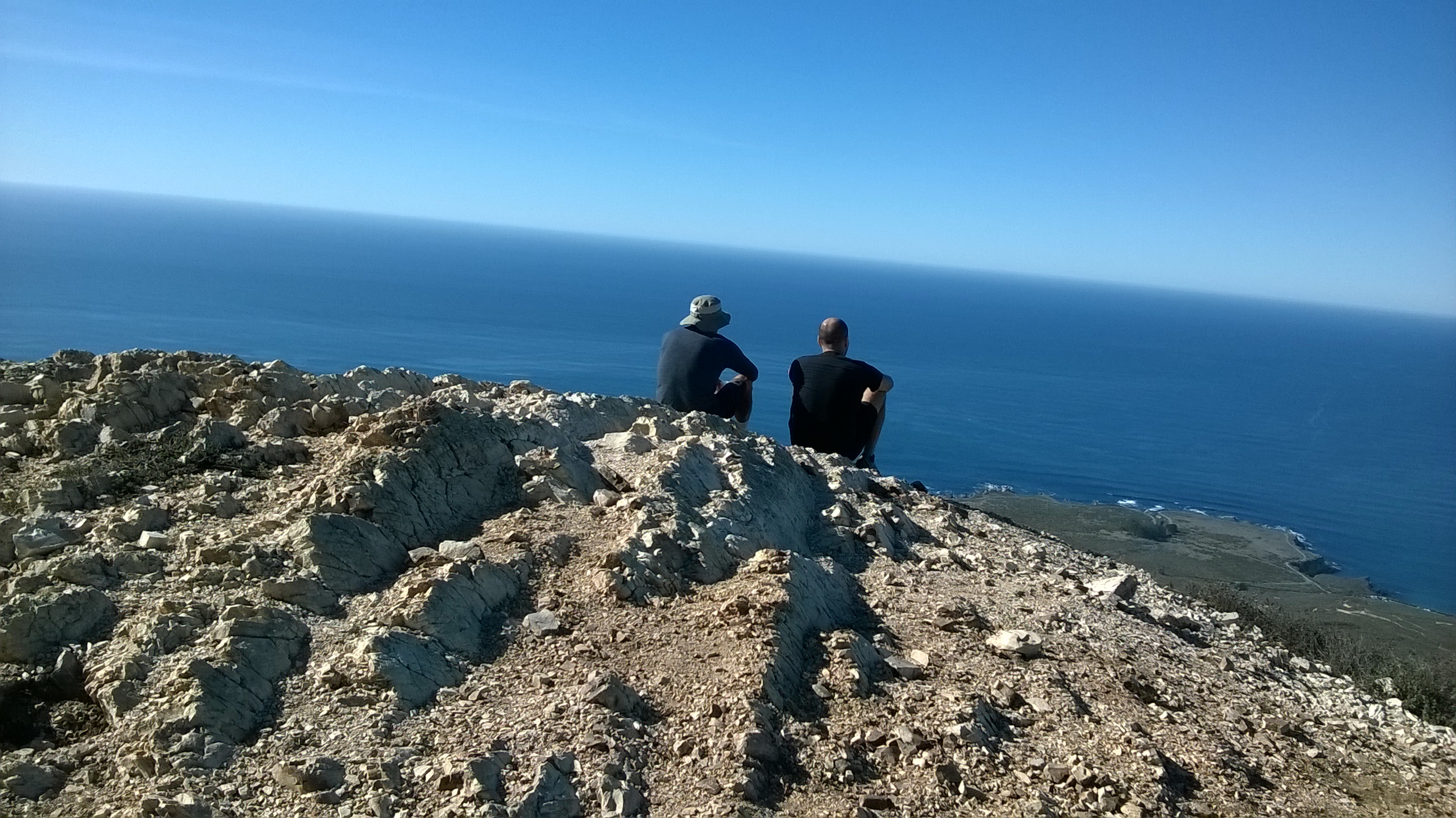
When I make it, the view is fabulous. I stand back from the two of them, watching them look out over the edge, safe in their sitting-down perch, still chatting, still secure that the ground will always hold beneath them.

Like life itself, this walk becomes a competitive game of philosophy versus reality. When you have walked as much as you can, endured as many cross-backs as you should have to, do you then jump across a slick granite path to reach some ultimately theoretical goal? Sometimes you do, and sometimes you don’t. But today, even though I am tempted to just refocus the camera to seem as-if  I am on the edge of the mountain height, I take that last step to claim the territory I am walking. Maybe next time, I’ll find a bench and wait.

WP_20141127_053
best photo in the world

Please join the Monday Walk with RestlessJo and friends:

Walking the “Sea Glass Festival”

Pitted, frosted, opaque and weathered. Bottles clash with the ocean – the waves always win. But I also take a prize today – a walk that isn’t what I expect or plan, but what life brings as a gift of happenstance.

The Sea Glass Festival is a spectacular weekend of sea glass-inspired art, music, food and fun that appears like the magical mermaids it celebrates every March in Cayucos, Ca. Just 4 miles north from my house along Highway 1 in Central California, it’s a perfect way to spend a sunny afternoon. But there won’t be much walking, and since a welcome storm is coming tomorrow, I should combine my usual daily walk with the festival visit, because I may be house-bound for several days of rain-rain-rain. Visit Estero Bluffs State Park on the way? Yes, please.

It’s a beautiful and short drive. The bluffs of Estero Bay are familiar places, where shipwrecks, walks and wildlife entertain us creatures fortunate enough to visit. I choose to begin at the northern-most point of the State Park, a place I have never walked before. The park follows the coast for over 7 miles, with a tangle of pathways, and my walks have always covered the trails closest to home.

With hillsides lagging behind in the usual intense green of March, I am glad for rain, but glad also for today’s sun. I can get out, stretch my legs, and enjoy the spectacular weather before tomorrow’s storm. I park the car and walk west.

Stubby green spikes peek out from the winter cover of dried grass on each side of the path. A break in the fence allows me onto the trails that zig and zag toward the edge of the bluffs. I look ahead to the ocean, a ribbon of tourquoise, then dark and brilliant green and finally a dull silver, the depth of the water and the rows of seaweed making water-colored changes in what I see.

I see also a black something, in the far distance from my first steps onto the path. It rises up from the water and slides back down. Fin? Tail? I decide the dolphins are swimming en masse today, and follow the quickest path to the land’s edge. I want to see the dolphin spectacle – a stunning dance of togetherness and talent. I quicken my pace.

But the dolphins – or whatever else might be in the ocean, black formed and reaching up from the water – disappear, heading north. I follow.

A fence keeps me from walking down to the beach. This is Snowy Plover territory and it is their breeding season. Tiny birds that live and reproduce at the water’s edge, California protects them from the likes of me while they go about increasing their numbers. Since I enjoy seeing their popcorn puffs on the beach and their thousand flashes of white into the sky, I am happy to give them space now, as they will give me a show come autumn.

I walk past the Snowy Plover homesite and arrive at the walking beach. This long, curving stretch reaches toward a rocky cliff that ends Estero Bluffs State Beach. A slow-moving seal rolls in the waves two lines of surf from me. Toward the rocks at the end of the beach, I spot three sea otters, laying on their backs to eat their meals off their stomachs. Cormorants dive into the waters and plop back out with their catch. Idyllic? Yes.

My eye is drawn out farther into the water. The black fin or tail or something rises out momentarily, between the dark green, the sea weed and the silver. Too quick to distinguish, some other sea creature teases me.

I turn my view to the beach itself. A flash of color pulls my attention to the sand. Then another. And again. Since all my home decorating involves such finds, I am engaged for hours, walking a peaceful beach and collecting the leftover of man-made glass fragments, sanded against the grindstone of the ocean and replaced on this beach, blinking against today’s sun and beckoning me to reach. Into my hand, time and again, come rounded, pitted, faintly-colored bits of yesterday’s bottles. I have found my Sea Glass Festival.

It’s not the one I intended, but as the afternoon passes and I am not ready to leave the beach, I realize next year will be soon enough to attend the people festival. Today is for me, the beach and the ocean.

I walk back to the car, marveling at the catch in my hand. I start the engine, look up and see the spouts of two whales, finally admitting to me that it was them, all afternoon long, teasing me from behind that line of tourquiose water.


Please join the Monday Walk with RestlessJo and friends:


The Most Important Walk

I am just back from several months of traveling around, busy-ness and not-writing about the wonderful walks in my life. I will be catching up with all the adventures you all have written on your blogs; but today, I am thinking about one particular walk – the most important one, in fact.

There are so many reasons to walk around, wherever you find yourself:

  • The (fresh) air: humid, cold, dry or hot, perhaps clean and dirty at the same time, smelling of the local mix of spice.
  • The feel of your feet against the ground: uneven surfaces, soft or hard, with painted lines to guide you or with pulverized dust unsettled at each step.
  • The sounds: machine or creature sounds, music from a change in weather or from a radio, sounds that tell you how many people are near by and what type of things accompany them as they live their lives.
  • The sights: giving you memories to call back sometime much later, views from every day or from a once-in-a-lifetime walk.
  • The sense of renewal: a time to put away your thoughts and just experience what you see, feel, smell and hear.

I am grateful to be able to walk in many places around the world. But I am most grateful to put my feet to the ground and walk out my front door. It’s a habit that helps me live a better life. Because that most important walk is the one we take every day, wherever we are.

Walking with the Skyview

What price do you pay for a memorable walk? Most times, when I walk, my eyes are aimed safely downward. But I pay a price for that view: I lose that fabulous, here-in-this-moment-lost-in-the-next chance to see the spectacular view above. My reward is safety; my feet don’t trip and I maintain balance. I see most of those stubby clefts that might cause a fall. And since I fall often in life, it’s a good view for my well-being.

On my usual safe walks, looking down past my toes, I see the shore birds. They stroll along our plentiful tide line, arguing over food, but without a heartfelt clamor. Though the wind ruffs their feathers, their manners remain mostly in place as they pursue their natural tendencies. They may squabble, but in the end, they share the bounty.

I also see the glorious transition of rock to pebble to sand. On packed wetness near the rolling waves, with my eyes aimed downward, I take a geological journey through time – sedimentary, igneous and metamorphic laying themselves at my feet. It is nature’s best classroom as I walk along this learning curve of salty water licking the roughness from stone.

Strolling with my safe step, I see what I’ve seen before. Maybe the walk has become habit, but it still contains some little magic. Mist lifts from the incoming tides and floats past my feet. I step around the shore birds’ droppings, having been warned by past experience and present sight. Tangled ropes of Giant Kelp, Dead Man’s Bootlaces, Bull Whip Kelp, and Turkish Towel wrap themselves around the tide, which comes and goes everyday, just like me.

Because I walk this shore daily, a routine litany of views repeat themselves along my path. Stones, sand, seaweed, shore birds. As my eyes aim downward, keeping me safe, I see usual life-assuring sights.

Then the unusual call of a sea hawk interrupts me. I haven’t heard it before, and the sound itself pulls my eyes to the sky. There it is: a seasonal newcomer to the neighborhood.

I stop and watch as the young Osprey dives toward the water, at the same time flapping wings and stretching claws. This new king of the tide comes away with a shining, struggling fish, then flies away to the tall eucalyptus. As I continue to lift my eyes, I see the fish tail protest its tragedy, and the Osprey settle onto the tallest limb of the tree.

I change my trail and follow. ‘Lift up,’ I tell my feet, unused to this path. Since my sight is engaged in the sky escapade, I can’t guarantee my own safety. Am I willing to pay this price?

When I get nearer the eucalyptus, I see that the Osprey has begun its meal. Its head bends for a bite, pulls away with a satisfied tug. I see the fish’s silver flash and its tail still protesting. Then, against the skyview, I see another signal that our seasons are beginning to change.

Stepping into the cluster of trees, I am greeted by the first sighting of Monarch Butterflies. Into the tall branches they flit, in and out of the sunlight, delightful and light-hearted against the feast that is occurring three floors up in this small forest. I count 25 butterflies, and know this is just the beginning.

I have been aiming my sight skyward for quite awhile now, and haven’t yet fallen. At times, I feel dizzy from looking up and wonder if my neck will feel the strain. But nature’s action is happening against the sky today, so that is where I must look, regardless the price.

So often in life, the spectacular is mine for the moment, and gone too quickly. I won’t experience it if I always choose the safe route, eyes aimed cautiously downward, saving myself from the harm I think is there, but forever closing my view to happenings I may not even imagine. Fabulous happenings like Ospreys and Monarch Butterflies.


Walking the Plank


Shipwreck! Like a bold-font heading from the more excitable history books, full of swashbuckle, flashing swords, hook hands and bandanas, my friend Brian spoke the words. “A shipwreck in our own neighborhood, did you know?” His voice – adventurous, mischievous, pirate-like – made me reconsider the location for my usual afternoon walk. Instead of heading out to our nearby beach, I’d start-up the car and drive four miles north to the Estero Bluffs. Along the cliffside, I might walk into a fantastical relic of history. For it was there, several days past that a fishing boat went astray.

The long trail from the parking lot off Highway 1 to the bluffs has changed since my last visit. I remember sunshine, tall sparkling yarrow, cow’s parsnip and stout reeds of grass. Today’s view takes in a flattened and stick-filled landscape, surprisingly dry with the ocean so close.

Thin, empty reeds stretch up from the grasses, now brown and appearing as if Mother Nature has brought out a brush and combed the strands of pale ash blonde against the earth. The ocean hides. Even the sound of the waves lurks behind the stingy landscape. Today’s sun casts its warmth onto the unseen tops of the cloud cover. Gray sludge fills the sky. I strain toward the promise of warmth through the clouds, but there is little feeling at all. I walk in the absence of heat and of coolness. It’s almost a sense of suspended weather: not hot, not cold, not breezy, not still.

I walk the dry path, avoiding the long and deep crack of moisture-deprived soil and dodging the millions of snake holes. Where are the snakes? With so many holes, there has to be a population of snakes that this flattened grass and thin tall reeds cannot hide. In the earlier lush of spring, when creatures that wanted to hide were given their heart’s desire, I had stopped to watch a long, fat, dappled snake worm into its hole. But today, with an unaccommodating landscape, I see nothing that moves. Neither snakes, nor the friendlier ground squirrels, nor even any insects.

And then, suddenly, there is a boom from incoming ocean fronting an off-shore rock, the crash and crash again riff of the tide, and I step to the edge of the bluffs. The drop-off to the water is immediate, thirty feet or more. The earth gives way here and there, and I step back, remembering that me and quick drop-offs do not peacefully co-exist. There is a trail close to the edge and another a safe ten feet away. I choose the safer route, even with the possible companionship of snakes.

To the south, over the crest of a bluff, I see the very top of a fishing boat mast rocking in the tide. I have seen fishing boats before from this path, but to the west, plying their trade in the deep water, miniatures along the horizon. But this one leans against the cliff, bumping into land with each incoming wave. Too close. It shouldn’t be here and doesn’t belong. But there it is – the wrecked ship.

For twenty minutes I walk toward the site. I am losing Brian’s cheerfulness, and wish he was here to remind me why this was a good idea. Along the way, I pass a small feeding frenzy. Pelicans and cormorants and sea gulls lunch on the usual menu. A seal raises its head from a nap, looking sweet and innocent. And well-fed.

There are two people standing near the shipwreck, looking, but not approaching. For the entire time I walk toward the tragedy, they stand paying their respects. For, suddenly, that is how I see the whole situation. Not an event from long ago, nor a paragraph in a history text. But a tragedy in a neighbor’s life. I remember a simple texted comment made by someone after the newspaper article: How did this boat get where it is? And another comment in response: Poor Piloting. As sudden as the boom of wave against rock, I remember that life isn’t about simple answers. Too often even the best pilots are lost.

Against a backdrop of unruly fun and whimsy, I am brought back to life’s unrelenting rules. We all walk the plank of life. I feel I should erase the exclamation point I put on the end of someone else’s tragedy. Shipwreck.