Walking Los Olivos

Lush is not a word I normally use for the hills of California’s coastal range. The seasons here too often turn to dry golden grass. The leaves of the native Oaks are small and the bark freckled with cracks. It is a landscape I adore, one I grew up around and still consider a gift from nature. But this landscape is not best described with extravagant words: lavish, plush, generous. It can be harsh and barren. But if you visit Los Olivos in the spring, it may surprise you.

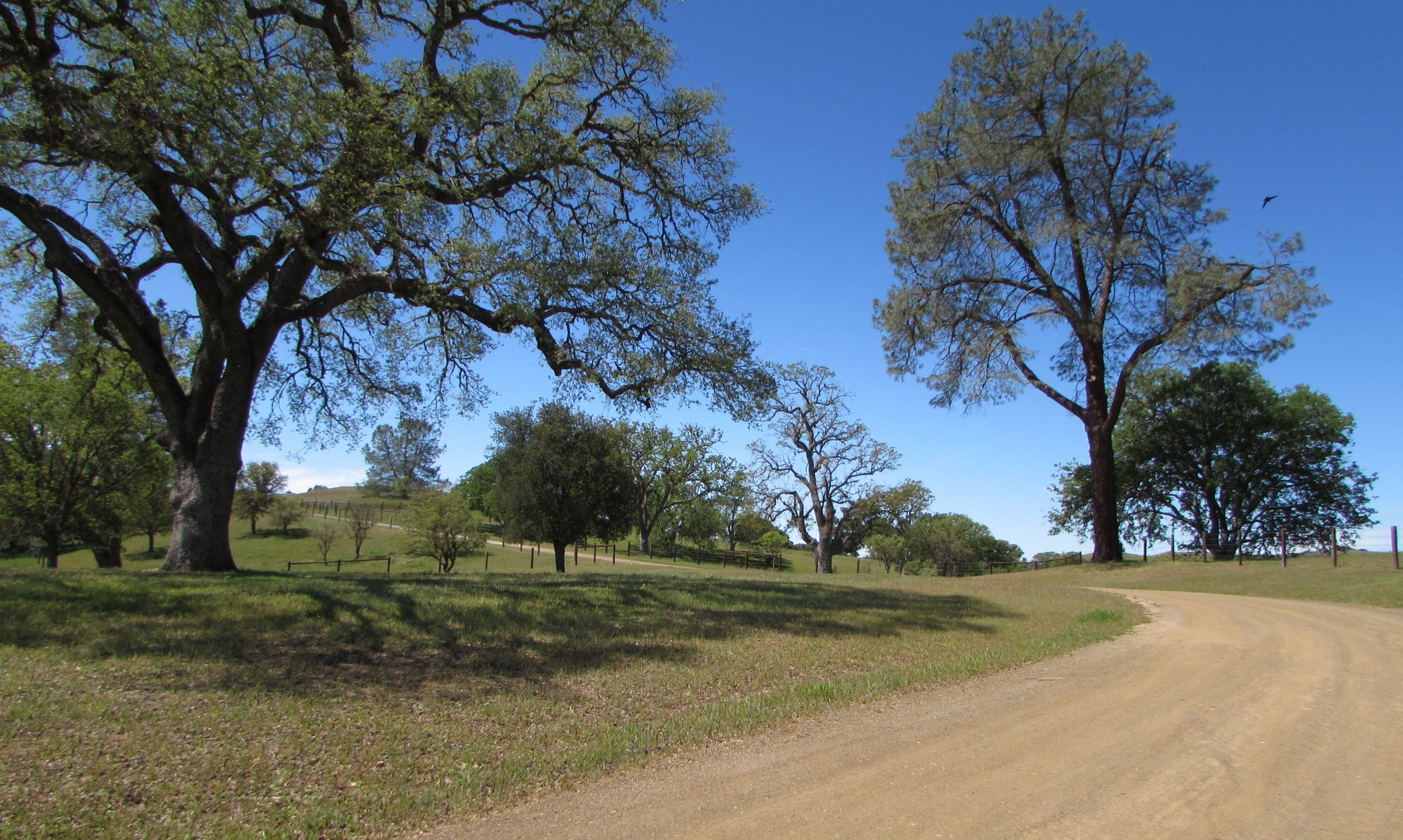
The town surprised me. A simple few minutes off Highway 101 through a drive that was absolutely lush, the town fit the landscape of the region. Country-like lavish, polished clapboard, inviting. It’s a gem nestled in the rolling hills of Santa Barbara County. Known for its picturesque atmosphere, this town’s rich character offers an escape from everyday life.

My walk began at the Corner House Café. Central Coast Beach Boardwalkers, a club of the American Volkssport Association, kindly provides a map of two walks in the community in the brochure display inside the coffee house ($3.00 donation, no online access.) One is a 3.1-mile walk, the other a longer 6.8-mile walk. I was here to explore the downtown area, so I chose the shorter walk, though the mini-horse farm on the longer route tempted me.

The town is peaceful. Early morning sun poked over the hills, but with a soft touch. The slow pace here encouraged me to take my time and absorb the details. The walk took me past Los Olivos’ historic architecture. Old buildings, with their classic façades and quaint storefronts, tell yesterday’s stories. I paused in front of the Los Olivos General Store, a staple since the late 1800s. Many hands had turned its doorknob before mine.

As I strolled, the scent of freshly baked pastries wafted from a nearby business, and I couldn’t resist. Buttery croissant in hand, I sat on an outside bench, savoring the warm pastry, watching the town’s residents go about their day. There’s a certain intimacy in this experience—sharing a moment of simplicity with the community.

Los Olivos is known for a vibrant arts scene. My walk took me past several galleries, each showcasing the work of local artists. One particular gallery caught my eye with its colorful paintings depicting the landscapes of the region. These works captured the drive I had just finished and reminded me how fortunate I was to experience this scenery firsthand.

At the edge of town, I could see nearby vineyards stretched out in every direction, their lush greenery on display. Los Olivos is more than just picturesque; it is a place where history, culture, and nature converge to create an inviting atmosphere. The simple act of walking through its streets allowed me to connect with both the town and myself in a way that enriched my walk.

Slow down, savor the moment, grab a map from the Central Coast Beach Boardwalkers and stroll. In this small corner of California, I discovered not only a picturesque setting but also a sense of belonging and peace that is often hard to find in our fast-paced world.
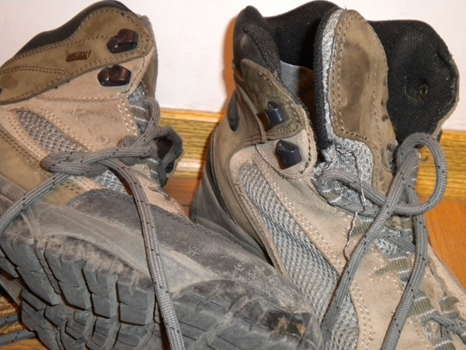
Walking Montaño de Oro, Point Buchon

I’ve been hoping for a lot of things lately. Hoping to make plans that don’t need constant revision. Hoping for new places to go. Hoping for more walks that take me long into the hills or along the beach through the dunes. Longer walks that stretch my calves and work my lungs and teach me to breathe. I like stability and routine, but sometimes a little change helps everything in life.

Just around the corner is a place that gives the possibility of a longer walk. Montaño De Oro State Park lets everyone ramble however they want. There are crushed granite trails, asphalt trails, trails along the edge of the ocean and ones straight up mountains. The path south along the coast toward Point Buchon, way in the distance, calls to me. I haven’t yet walked it.

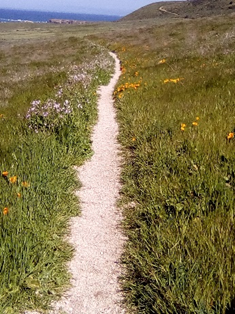
The trail winds its way, out there beyond where I have ever been, a trail that runs up the hill, around the bluff, and disappears into that softly turquoise sky. In the spring, the long path is a warm earthen line between mint-colored grasses with occasional gold from poppies or goldenrod wild flowers. I see it from a distance. The path invites me like all those routes that wait impatiently to be walked, while I test out my footwork and the strength of my laces or the time until my next obligation or whatever else is keeping me from setting out for a long stroll.

It’s a good challenge. The curve of the pathway is so far off it disappears from view, marking the spot that is probably half-way to the point where I plan to turn around. Some walks that I’ve never taken, like this one, I think about and design a route and re-think and design again until I can put foot to path. The road will be similar to others I have taken but not exactly the same. I know the trail will be a worthy one, if only for the freshness of the air.

Our lungs know what is good for them, and this air is their dessert. Deep breaths are on the menu. Replenish your lungs, relax your mind, calm your heart with those long measured breaths. Good health waits for me on the long walk into the hillside along the Montaño De Oro ocean cliffs. Shorter walks around the area have taught me what I might expect on a longer hike. Seven miles, eight, maybe nine or ten by the time I take the return trip. What’s keeping me from this long walk?

I’ve been reaching for a more demanding work-out inside my walking self-therapy. We all get into times when we have too much sameness. The same wake-up time, the same breakfast, the same walk every day. All of that is good, but there is also goodness alongside a challenge. I have held onto this quest to take a long walk for quite a while. It’s a forever to-list that hasn’t been done. Is there a rush? Do I need the pressure of a mental reminder that I have a goal I haven’t reached?

One step after another – this philosophy makes my life simpler, and when I remember it, it makes my life better. But sometimes the simple way of looking at things needs a second look. Sometimes, life isn’t simple. Right now, as I plan that long, long walk, my heart says ‘go’, but my hip says ‘no’. That’s when I have to remember that even many small walks to long places will get me there, eventually.

Walking USA

A walking lifestyle intrigues me. Twice I have lived where people walked as a way of life, where it is more common than driving a vehicle. For most Americans, it takes some getting used to. It certainly did for me.

In South America and Eastern Europe, when people shopped, they carried two empty bags and walked to the market. Those two empty bags remained a puzzle to me until the first day I went out to shop.

Like everyone, I walked. The grocery store looked like any modern store in the states, and the products, though the labels weren’t in English, were ones I recognized or could figure out. If the plastic tubes were new to me, and the letters confusing, the pictures of catsup pouring onto a burger helped me understand. I happily filled my cart with the things that people need when they move into new apartments. I wheeled it all to the check-out register, paid, watched as they put the items into bag after bag, filling to the top. I walked my cart out to the front of the store thinking I had done well.

Then I looked to the very small parking lot – few cars, and none belonged to me. How would I make it home with my overloaded bags? You can bet the next time I needed to shop, I took two empty bags with me and stopped shopping when they were filled.

That was just a simple lesson, one of many. It didn’t stop me from admiring places that accommodated walkers. And it hasn’t stopped me from rating my favorite vacations based on how much I can see by foot.

Recently, I began to plan a vacation from our home trying not to use a car. My idea was to start out from my front door, two bags in hand, like my neighbors in those other countries had done. But it would be a long walk, thirty days, 15 out and 15 back. Where would I go?

My plans took me twenty miles as the crow flies. The walk itself was much longer. I had to find routes around freeways, to hotel stops and campgrounds, along walking paths, and to bathrooms. That was just the planning stage, and it took me basically to Trader Joe’s and back. As much as I like Trader Joe’s, it wouldn’t be much of a vacation.

At times, I complain about our rugged American walking life. We have trail systems and back-country treks. We rate our outdoor adventures according to the inclines we mount, and we like to be challenged. There’s nothing wrong with all that, but it seems we miss out on half of the pleasures of simple walking, the part that comes from ease and comfort. That’s where our walking life leaves us in the dust. We normally hike in rustic places, not through our cities. We don’t have a system of walking paths. If we visit towns, we can venture out on our own to find walking spaces, or we may join a walking tour, but a walkable path from one town to the next city isn’t easy to find.

But I have found an organization of Americans who walk. They are called American Volkssport. They have mapped out and organized thousands of walks in our towns and cities and many places of interest in our country. I have taken a couple of their walks, and they are delightful, even if I have to drive to the start point.

In the next year, I plan on taking as many of these walks as time allows. You can join me by reading about them here in Estero Bay News. Or you can join me on the path, one step at a time.

Next up: Walking Los Olivos

Not-Walking Antarctica


For ethical reasons, perhaps we shouldn’t have gone. For financial reasons we chose to go the cheap way, by cruise ship. For companionship, we went together, even though it was Bruce’s idea, completely his idea, his idea from the beginning and thoroughly his idea to go in the first place. His reasoning went something like this: having already put our feet onto the earth in six continents, we should visit the seventh. We’ve done other faulty things for less well-thought reasons before. And so, for adventuring reasons, we did go.

Here’s the story (and remember, this was entirely Bruce’s idea):

We settle in to the massive ship, and I am torn about being here. Is it comforting that we have so much protection from the elements and the rough seas? The ship is completely full, and over-run with older people carrying large amounts of camera equipment, Audubon guides and Sir David Attenborough’s audio books. I learn that there is a naturalist who will be making presentations as we get closer to Antarctica.

Before we go to sleep the first night, there is a grumble in the atmosphere of the ship: A slightly unsettled blip in the inter-personal current. I think it is just me getting used to this place, just me getting my sea legs.

The next morning, long after the time when I could jump ship and swim to shore, we get a revised itinerary. It will take us longer than anticipated to get to our destinations, so our first stop, at Ushuaia, Argentina will be shortened. There is a vague explanation that is mumbled around the ship – an engine is not working quite right. And we are heading to one of the most turbulent oceans on the planet.

The stop in Ushuaia is even more brief than expected, due to weather or winds or engine trouble. Once back on the seas, we are told that it will take us longer than expected to reach Antarctica, due to weather or winds or engine trouble. We entertain ourselves with visits to the naturalist’s programs. Each one is entertaining and so crowded people are sitting in the aisles. What else is a ship full to do?

Passengers begin to emerge who know a thing or two about oceans and engines. I hear people complain about ship-shape upkeep and the seriousness of less-than-perfect engine function in the middle of a rough sea.

We do make it to the shores of Antarctica.

The continent itself is thrilling. Ice, snow, rock and ocean. Completely gray and white, with a bit of astounding turquoise when a piece of sunshine hits the two-story ice just right. Overwhelming in a black and white movie style, Antarctica spews its coldness into view. It seems to me a world apart from everything I know. It is unthinkable that I am here.

As we leave the continent, it is announced that we won’t be able to make our next stop, Elephant Islands. Bad weather, landing conditions, faulty engines.
That night, it is announced that we won’t be able to stop at The Falkland Islands. The next morning, we learn we won’t make the last stop in our itinerary, Puerto Madryn, Argentina.

During one lunchtime, Bruce – the one who wanted to be here – and I step into the buffet, and walk right into a security guard. Security guard? It’s not like he announces himself, but just by standing where he is standing and looking like he does, I know that’s what he is.

Then I notice that the buffet’s seating area is packed shoulder-to shoulder with passengers, and the multi-lingual speech is getting louder and louder. The windows are fogged up with the charged emotion that did not come from lunch’s sliced roast beef sandwiches. People are speaking in animation and high-emotion. I am uncomfortable and Bruce is nearly laughing. He asks the security guard what is going on while I sink into the background, losing my appetite.

It seems a joining of forces is occurring – the Argentine passengers and the larger tour groups (from the Philippines and from China) – have come together to sign petitions of formal complaints about the condition of the ship and the restructuring of the voyage’s schedule. They think this mechanical problem was foreseen and that we all have been defrauded and that King Penguins will be lost in the fray if we passengers don’t receive some recompense for having lost the opportunity of a lifetime.

I don’t know where to look for fault – the cruise line for skipping 3 out of 4 planned stops and running a huge ship on a faulty engine, the passengers for being as selfish as I didn’t want to be in booking this trip, or Bruce, whose idea it was in the first place.

We make it back to Buenos Aires, a safe place in any comparison, and nothing ever comes of anything. The petitions signed by every passenger (probably twice by most), the formal complaints to the governments and the companies involved, the simple violations of the rules of civility in promising one thing and delivering something quite different – nothing ever happens. It remains just one more life experience. Sometimes we just don’t get what we expect, but we do get something.

I got a continent I would never have seen by myself, and a never-ending story to recap time and again with the partner and love of my life. It was, after all, all his fault.

Walking Ushuaia, Argentina

I have been traveling through South America for a month at the point I reach Ushuaia, Argentina.

I think I know what to expect from the entire continent, in a general way. I’ve seen beauty and been shown gracious welcome. I’ve had the humbling experience of traveling by land through many border crossings and standing in line at two of those crossings for over 6 hours. I have braved city bus systems, fallen over several sidewalk irregularities, practiced my Spanish language, eaten food that did not agree, and enjoyed many meals that did. I have done all of that and am surviving – even loving the priviledge of being able to put my feet to the ground in places many people can’t imagine ever seeing in person.

But all my experience, as well as my abiding stereotypes, gives nothing to prepare me for this small city at the edge of the world. I begin my walk at the harbour, facing the downtown area and looking up to the surrounding jagged mountains.

I walk across the street to the visitor’s center. It seems no single nationality nor one language has a lasting claim to this place. I remind myself to speak Spanish, but I lose count at nine languages that seem common: Spanish, of course, and English, also German, Mandarin, Italian, the English spoken in Australia (!I know they can say the same about American English!), at least two Eastern-European languages (I think Polish and Hungarian?) and another tongue I can’t identify at all.

Across one street is the downtown area. It seems retailers find this place especially enticing, as brand-names from all over the world have built-up a presence here in this town of a bit over 50,000 souls. Hard Rock Cafe, for heavens’ sake, is here. It is apparent to me as I step into the city center – all two-square blocks of it – that something is going on here that should remind me that it is never a good idea to walk around with my stereotypes.

Whatever my expectations were, instead, I am greeted by: Upscale mountaineering retailers, luxury leather goods, specialty yachts, space-age small planes.

But even with the connection to the world’s marketers, Ushuaia remains a part of its pristine geography.  Even during this summer walk, snow is visible on the sharp peaks surrounding the bay, signposts warn of impending bear visits, the mirrored quality of the icy water reflects puffy clean clouds, penguins live nearby.

It all leaves me a bit out-of-sorts. I walk through the downtown and out into a more residential neighborhood. It is cozier here, and I find a bench on a pie-shaped park to sit and watch pelicans on the bay. I wonder what it is that has me so befuddled. I take a walk wherever I go; today should be no different. I am here today, and tomorrow venturing by ship to Antartica, but I find that Ushuaia is pulling my attention. On the cusp of viewing the continent that so few people ever see, it is this little city that makes me stop and think.

It feels more like home than I expected to experience in a place so far away from where I live. There is a California calm here, a confident idea in the streets that no town, anywhere, does life like it’s done here. I sit on a suburban bench, at the extreme southern tip of my connected continent, and I feel like I am living in the middle of California Cool. I think maybe that is not such a good thing.

But then, I remind myself, Ushaia knows itself better than I do. My own California calm takes over, and I decide to just let it be. Ushuaia seems to be doing just fine defining its own character, at its own pace. I’m the one that needs an attitude adjustment – and I hope I leave my stereotypes behind as I venture farther south.


Please join the Monday Walk with RestlessJo and friends:

Walking Buenos Aires, Argentina

Listening to visitors pronounce ‘Buenos Aires’ is enormously entertaining. People from Britain say ‘Ahhhres’, giving the word the sophistication it deserves. People from the USA say ‘Air-rays’. It’s a simple switch for them: just adding ‘rays’ to the already familiar word ‘air’. Curiously, travelers don’t seem to confuse ‘Buenos’, but there is already enough intrigue about the city. Buenos Aires itself is even more entertaining to travelers than its name, and everyone should visit.

This is my second time in the city; the first being over 40 years ago. I don’t dance the tango, I don’t eat pondorous beef meals (though the person walking next to me might like to.) But, now as 40 years ago, I find endless ways to entertain myself. This is one city where anyone can feel like a Porteño – a resident of Buenos Aires.

Some cities are strategically breath-taking, placed in an area of great beauty, like Bogotá, Colombia. Others may be located in a convenient area, like Panamá City, Panamá. Some communities spread like wildfire, consuming geography without apparent logic, like my former hometown of Pasto, Colombia. And some cities, like Buenos Aires, plot their own thoughtful development with grace and beauty, replacing topography with a vibrant and classic style that begs people to visit and effortlessly impresses them when they do.

We arrive from Lima and I pull out our hotel information. I am not always good at selecting places to stay. We are thrifty sorts, and like to get as much for our money as we can, but while we look for safety and value, location of the hotel is always our first concern. Can we walk to the places we want to see? Are there restaurants and stores close by?

The taxi driver knew the hotel right away, without the need for an address, which is a credit to him, and gives me hope that this time, I picked well. It is a hot day in Buenos Aires, and we drive into a neighborhood with a canopy of green extending over the city streets. The taxi pulls up along a shaded sidewalk to a shiningly clean hotel with ornate stately features. Melia Recoleta Plaza. It is classically beautiful, and I decide immediately that if I only explore this one building while in Buenos Aires, the trip will have been worthwhile.

The hotel has taken over a structure that was once a rooming house where Eva Peron lived. With curving staircases, gleaming wood accents, polished marble tile floors, this place acts as a living museum. Placards placed on framed photographs tell the history of Peronista Argentina. In black-and-white, next to the period architecture of the building itself, a history lesson begins before I unpack my bags in the room.

The area of Recoleta is home to our hotel. Even if tourists didn’t need to visit Evita’s grave in La Recoleta’s cemetary, they should come to see this neighborhood. The graveyard itself is a walking history tutorial, with cultural lessons displayed on tombstones. Decorations and poetry add details. Outside the cemetary, the shaded streets and the welcome of the cafes make walking a simple pleasure here. Carrying our map, we are stopped several times by residents who offer help with directions. One recommends that we visit the artisan fair in the park. We do, and find a huge gathering of craftpersons and shoppers. We are entertained for hours. Since I have decided that visiting Buenos Aires requires more than seeing the interior of the hotel, I now wonder if I really need to leave La Recoleta. The area is peaceful and inviting, surely sufficient for any visit.

But I do explore farther. El Ateneo Grand Splendid is just outside La Recoleta. In 2019, it was named the most beautiful bookstore in the world by National Geographic. When I walk into the store from the sidewalk, I wonder about the hype surrounding this famous place. I like bookstores, and have high expectations for the well-known ones. This one opens up from a fairly normal city street. It’s fine. But number one in the world?

And then I see the interior and understand. It’s so filled with architectural beauty that it’s difficult to focus on the literary works of art. This is just one more spot in Buenos Aires that can occupy an entire visit.

Of course, there are more. The walk to a popular shopping street, Calle Florida, from our hotel is a long one. In the heat, I wonder if my insistance on walking everywhere is wise. But how else do I see the sights I want to see at the pace I want to see them? The reward is in the shops along the street and the vendors with their goods on the sidewalk. And, of course, along the way, we stop in the shaded parks near the Casa Rosada, where the city’s political history has unfolded.

Every neighborhood we pass through and each restaurant and shop we enter, we encounter friendly, helpful Porteños. When we take a short break to sit in the shade of Plaza de Mayo, twice people approach and offer help with directions and recommendations. It seems to me the people of Buenos Aires want us to visit and enjoy the city they very obviously love.

That is the lasting impression I take with me from our second visit. I can stop worrying about pronouncing the name right. The important thing to remember is that Porteños love their city. This emotion spills out to welcome visitors like myself. 

Walking Quito, Ecuador


A cab from the bus station takes us toward the center of Quito, where we will be staying for several days. With over two million residents, it is no surprise that this city has neighborhoods of normal busy-ness, where life goes on along graffiti streets with too many vehicles. I think we are driving through most of these neighborhoods on our ride today, and marvel at the new yellow school buses, the traffic lights that impose order and the general rush I notice in the streets. We pass through bleached-out urban spread and then up-up-up to the high plateau of historical Quito. 

Once we reach Hotel Casa Gardenia, in the center of the city and settle in, my impressions change. Urbane, international, less hurried, welcoming.

But all those descriptions of Quito – the bustle and the serenity – surprise me. 

The last time I was here, traveling in a pack of two or four or six hamburger-starved young Americans, we sought out Rusty Burger the moment our feet hit the last step of the bus. We ate hamburgers translated into the South American experience and called them glorious. We stayed at a ramshackle hostel that was often packed to the brim with Peace Corps volunteers – like ourselves – and young back-packing world travelers from countries I had never been to. The streets of Quito I came to know 40 years ago had been a mixed-salad of old cars, old horse carts, aging homes inside tall stucco walls, and newer buildings along one section of a street near the hostel. It was a small landscape that I came to know well. I visited the historical section of the city only once or twice, after I had eaten my fill of homesick hamburgers.

Today, our hotel, built into an ancient building, lies along a curving and narrow cobbled street, and is guarded from that street by a thick wooden door from Colonial times. But inside, a modern glass-and-chrome structure offers a massive picture window that frames the entire central square in one gorgeous view. A storm approaches as we check-in, then passes by, cleaning our perspective and setting up our visit to be just as new and refreshed as the view itself. 

Our location offers an easy walking-tour visit to old Quito. We start out holding a tourist map and head down, down the narrow street. It contracts so much at one point that we have to yield for cars. At another passage, the sidewalk has steps that simply dissolve into a gutter from the 1700’s. We walk through a tunnel of stonework from that era, as modern cars compete with us for space.

Then we are at the central square. People call it the Grand Square (Plaza Grande) and Independence Square (Plaza de la Independencia). Ancient stonework continues from the street, but the square itself blooms with color from plantings of flowers mixed with grassy sections and lush trimmed bushes. People are everywhere: walking along, and sitting on the grass and on benches. Massive two- and three-storey buildings line the square, each with a historical purpose: the cathedral, the presidential palace, a grand hotel.

The building that attracts us most is the Archbishop’s Plaza, and the reason we choose this place is predictable. We are in search of food. Inside this former residence of Quito’s archbishop is a beautiful warren of tourism. The interior of the building holds several patios, one with a quintessential fountain, another with a zigzagging covered walkway. There are hallways linking the interior patios and enough entrances and exits to confuse any visitor. And there are restaurants.

We have a hard time deciding which menu to choose, and end up taking a table on an upstairs outdoor patio and eat a wonderful humita ( similar to tamales.) Another rain storm passes as we eat, and the patter of the rain into the interior courtyard is exactly enough to bring a pause to the day, but not enough to change our plans.

After the meal, we continue walking downhill to the city market. The two-story concrete structure contains fruits, vegetables and every imaginable meat. Cascading boxes are hidden behind multi-colored produce: purple and yellow potatoes, orange- and white-speckled corn,  light red-skinned plantains. Because there are ingredients, there are also food stalls. Fresh juices, roasted whole pig, llapingacho (stuffed potato patties.)

There is so much more to see, and we have some days to catch our memories of this city we had loved. Forty years later, I am joyful at discovering this modern transformation of Quito. Eating hamburgers from home seemed important at one time. And maybe that is a good personal memory. But Quito itself is so much more than Rusty Burgers, and I am very happy to know that now.


Please join the Monday Walk with RestlessJo and friends:

Walking Otavalo, Ecuador


It’s been 40 years since my two feet walked this ground. The cement umbrella-ed artisan booths are still here. An aura of tranquil living impresses me – now as before – and it runs counter-point to the dramatic setting. Clouds still curl over the mountains. Something about the high-altitude air makes visitors feel they’ve never been clean before. But surrounding the market I remember from years ago are now rows and layers of canvas-covered awnings that expand the market to two or three times the size it was.

If you visit Otavalo, today as 40 years ago, it is likely for the artisan market. I had made the trip several times from my home in Colombia as a young woman in my twenties. I ate huge pancakes and drank my first kefir and orange juice in a hippie restaurant just across the square from the booth where I bought wool yarn for the blanket I would crochet. The hippie restaurant is no longer there, but before I venture out too far, my husband and I eat in a fabulous modern cafe. Then we set out to follow our memories. Will I find the same style of woven wall art that, 40 years later, still decorates our home? Will I find skeins of rough wool yarn, so natural that bits of dry grass and seeds are part of each creation?

Ruanas are still for sale, and as numerous. These long, sometimes very thick wraps of woven wool that have slits to fit your head through were ever-present and worn by everyone when I lived in the region. When I bought my own, from this outdoor market in Otavalo, and learned how to wear it with ease, I had finally felt at home with my South American experience.

Five times today, I circle the market, walking to relive my past. I stroll the rows across, and the rows up and down. I get lost in a tangle of tables where people sell items they no longer want next to the alley where you can buy sewing machines that were already second-hand when I was last here. Finally, I buy a new ruana, stash it in a bag, not sure if it is really the one I want, but knowing I need to go through this ritual.

On the few days of the week when there isn’t a market, the square in the middle of this town is empty, aside from the concrete circles with the odd umbrella covers. To me, these circular remnants are a wonderful touchstone, one thing that hasn’t changed, sturdy and reliable. Everywhere else I walk on this market day displays how the world has changed: cell phones and a million chargers for sale on top of a plastic folded table, warm wool sweaters and gloves and hats that are knitted by machine, wall-hangings in colors so bright I know there is modern chemistry in their dyes.

I want to buy some natural yarn, and think I will start a new project while we travel. I pick a craft woman, one among so many, and enjoy the back-and-forth of negotiations. The price is so good that I want to buy more than I can pack into my carry-on suitcase. I need a crochet hook, and can’t remember the word in Spanish. I try to describe what I want. The woman understands and takes me at a run into an alley where, in a brick-and-mortar shop, everything I could possibly need is for sale. The yarn I buy is soft and so warm my fingers are soothed just by the touch.

We walk to the odd-and-ends section of the market. My husband searches through tables and tables of screws and bolts, ancient watches, and finds a coin from last century to purchase.

It’s all a wonder: the stroll, the shopping trip, the search for memories.

I pull the ruana from the bag and put it on, walking away from the Otavalo artisans, comfortable again in this place of mists and mountains and forty-year old magic.


Please join the Monday Walk with RestlessJo and friends:

Walking a rainforest trail in Olympic National Park


A rain forest in the Pacific Northwest of the USA? Washington State is far from the tropics, and I have always associated rain forests with equators, hot weather and steam. I plan a visit – laced with a good deal of skeptism – after our romp around Hurricane Ridge.

Twenty minutes down the mountain we drive from the snow-crusted high-altitude of Hurricane Ridge. The Olympic National Park guide promises a rain forest walk close by. What do they mean, I wonder? Are they just tickling my fancy? Why am I wearing a jacket to a rain forest? There is still a layer of snow on the underside of my tennies. I think a public affairs person has gotten a bit over-enthusiastic with the details of this brochure. Rain forest? We’ll see.

I have to settle for the small rain forest walk near the Hurricane Ridge Visitor’s Center just outside Port Angeles, because the roads to the park’s Hoh Rainforest are still closed because of snow. Snow. I am still suspicious that winter weather and ferns can co-exist. We’ll just see.

We park at the visitor’s center lot and follow a racing group of twenty-somethings who are chattering with excitement. Where are they going in such a hurry? Why the rush? They are pursuing the call of warmth and hanging vines with greater confidence – and enthusiasm – than I. They must be rain forest believers, and I decide I want to believe, too. They scoot up and over fallen logs and along a creek in their race to touch this natural dream. Perhaps they are hurrying to follow another hiker’s spotting of a drip off a fern in a gully of steam. There might be one, just one, in this lip of a forest off a road to ever-lasting snow.

The young people scurry on, taking a fork in the pathway toward a work camp. I decide they already know much about this area, and take on their confidence for myself. If they have found a rain forest here, then I might also. I stay on the path that promises ferns and mist and hanging moss.

Up and down into the ravine, the old growth begins to show itself. Slips of sun bring warmth and shy rays of brightness. The green of the plantlife and the cozy red-brown of the mulched ground lay around me with the comfort of cool mists and soft light. It isn’t a hot rain forest, but here it is, with its light-hearted coolness splattered about with fresh but humid air. I seem to walk through one after another – first cool mist, then sun-warmed air. No wonder growing things do their very best work here. It’s soothing and quiet and just exactly right in its temperate comfort.

I am happy enough to slow down and take in what nature is providing right up close: ferns, lichen, moss hanging from trees, cooling steam rising from a downed lodgepole pine as the sun warms the bark. Proof of rain forest.

I am convinced. Maybe it’s not exactly the biome I used to teach my third-grade students. But it is magical and it is here, unbelievably close to snow in the early summer of the Pacific Northwest.


Please join the Monday Walk with RestlessJo and friends:


Walking Hurricane Ridge, Olympic National Park

Snow in June. The possibility hasn’t crossed my mind. At my comfortable Central California home, snow never falls, even in January. As we drive from Port Angeles to Hurricane Ridge in Washington State’s Olympic National Park, there it appears atop the higher mountains that begin to come into view. Then, as the car climbs, more snow appears in patches near the road. And finally, snow makes changes to my plans, as I compare my mesh-topped tennies to a foot-high mound of glistening cold white along a marked trail.

We park at the Visitor’s Center, and wonder at the snow abundance. It stands in three-foot high arches over the trail we want to walk, sits on the meadow in large football-field-sized spreads, and has not yet dropped off some branches of the tallest lodgepole pines. Snow does not fall during our walk – but the white coating is all around, because it had obviously fallen all winter long, then stayed.

Mine may be a small walk, but the views are large. Snaggle-toothed mountains rim the horizon to the south and east. North and west celebrate the vista toward the Pacific Ocean and the expanse of water between Port Angeles and Victoria, BC. What a treat it all is, and I am once again amazed at the sights we can see if we just get up and go.

I cross over one of the snow spills that covers the trail. Close up, the icy mound is crystaled and gives way easily. It’s not yet warm enough to coax the snow into melting just because it’s June, but even though it holds together in a cold hillock, and even though it covers the trail, there are signs it won’t last forever. For one hint of warmth, the sun bounces off the clouds and the surroundings, a promise of warmer weather. At least I hope it to be.

But not yet will anyone see that change, and certainly not me today. The sun is muted by a cloud as I reach the next snow-covered portion of the trail. It is too deep and too wide to cross. My walk reaches the turn-around point. Going back, I take time to watch creatures on the ground, in the trees and overhead.

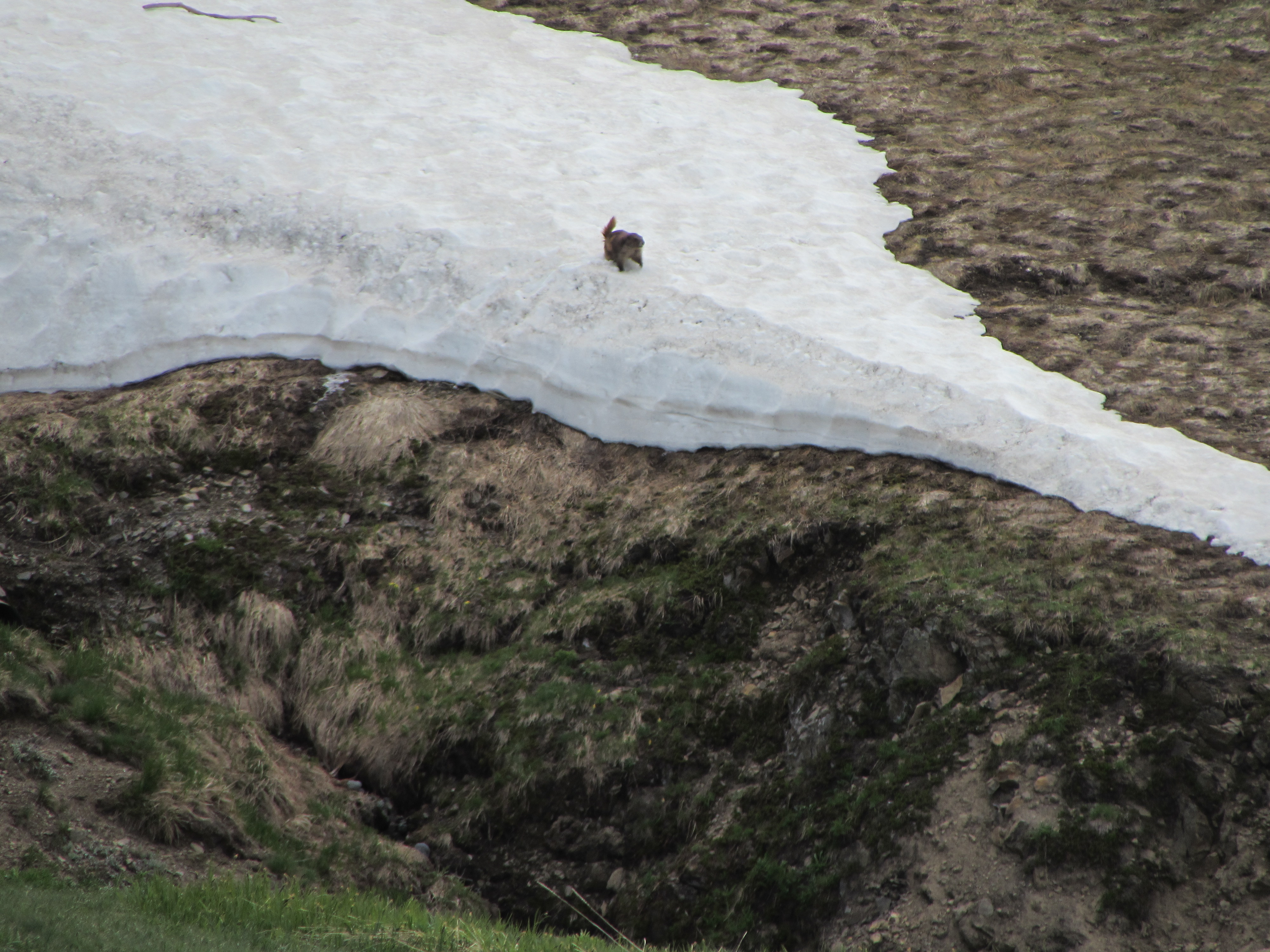
I especially like the Olympic Marmot. At first sight, from very far away, I think the creatures are foxes because of the red flash of their tail as they run. I pull out my binoculars and compare them to the diagrams at the visitors’ center. Definitely marmots. Deer are everywhere, and I have to remember that I should not approach them. They, of course, have not read that park regulation, and approach me regardless. Along a paved road heading back to the visitors’ center, I have to race-walk away to keep the deer from getting closer than the Park Service thinks is safe.

IMG_1809.JPG

Wiser people than I would have studied-up ahead of time, been more travel-savvy or known to pack snow shoes. But somewhere along the way from wanting to control everything in life and now – older and more understanding of life’s serendipity – I have tamed my need to know everything. Plan better? Why? When even the mule deer cheer my arrival, unannounced, unstudied, willing to take whatever comes. My mesh-covered tennies will survive.


Please join the Monday Walk with RestlessJo and friends: